
When discussing the heating of buildings, a distinction is often made between two fundamental principles: radiant heating and convection heating. Both methods can provide heat, but they do so in different ways. And that affects comfort, indoor climate, architecture and interior design.
Radiant heating primarily works through heat exchange between surfaces, while convection heating primarily heats the air in the room. The two types of heating can therefore feel different, even when the air temperature is the same.
In this article, you can read about:
- what radiant heating is
- what convection heating is
- the main difference between the two principles
- what the difference means for comfort and the indoor climate
What is radiant heating?
Radiant heating is the transfer of heat between surfaces. Rather than primarily heating the air, thermal energy is transferred from a heated surface to people, building elements, furniture and other surfaces in the room that have a lower temperature.
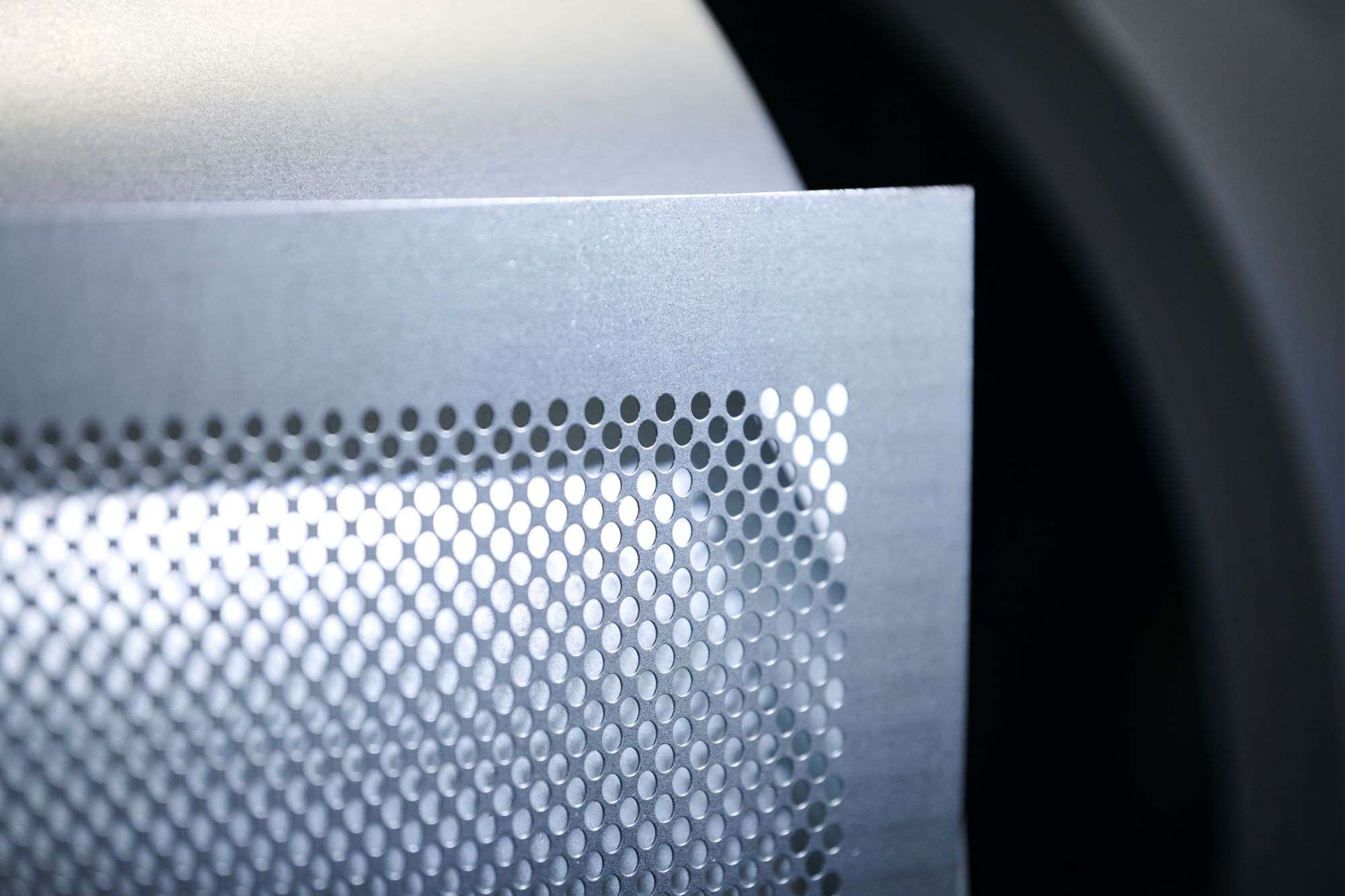
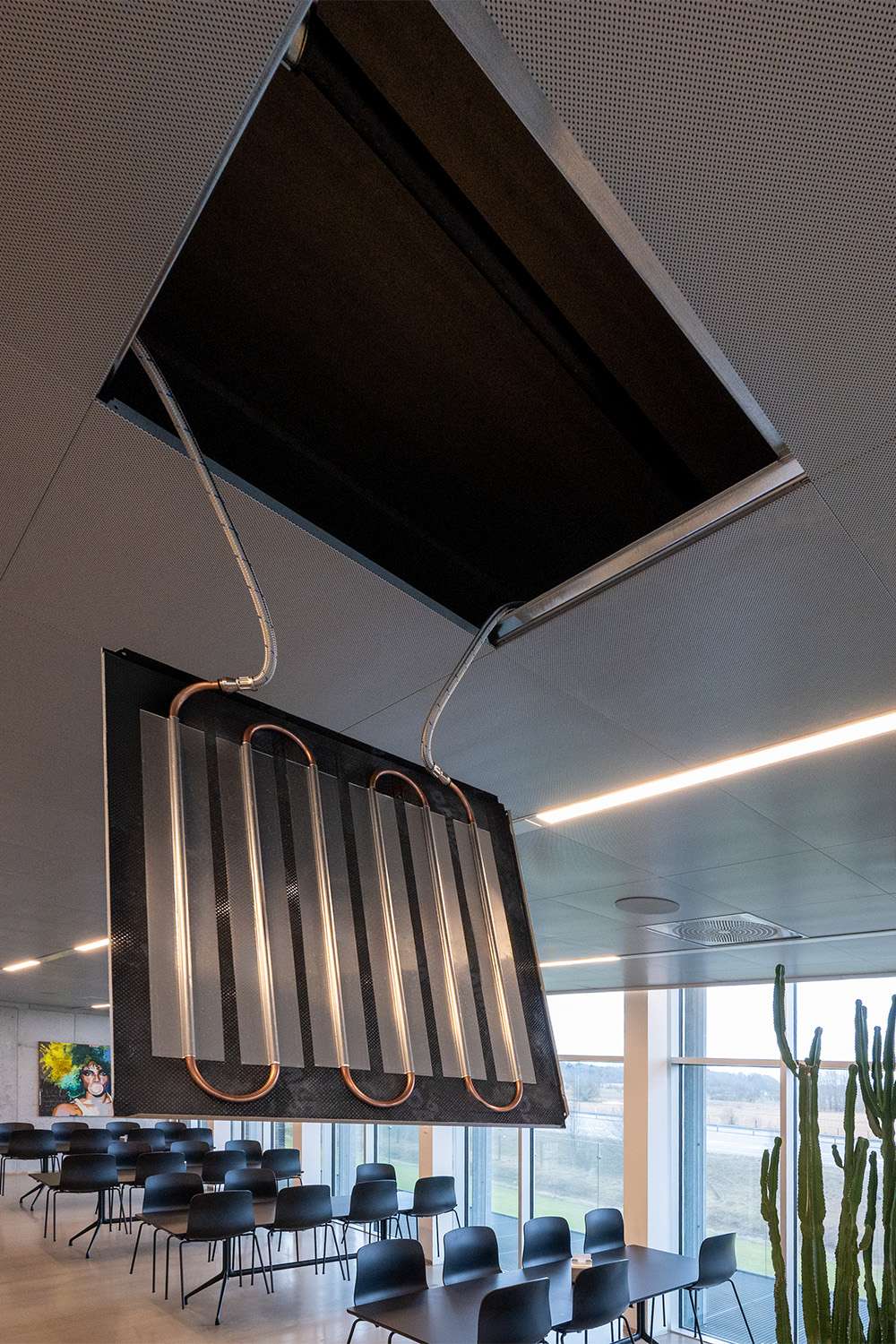
At DAMPA, we work with water-based, low-temperature radiant heating. This means that warm water circulates through pipes and heats a ceiling surface or ceiling-mounted panel. From there, the thermal energy is released into the room as radiant heat.
When radiant heating works optimally, it should not feel like a distinct heat source. You should not have the sensation of sitting beneath a heat lamp. The room should simply feel comfortable, stable and naturally tempered.
For a more basic explanation, you can read our article: “What is radiant heating, and how does it work?”
What is convection heating?
Convection heating is a form of heating in which heat is primarily transferred through the air. The air is heated by a heat source and then moves around the room. This can, for example, take place through radiators, ventilation systems, unit heaters or other systems in which warm air plays a central role in heat distribution.
When the air is heated, it becomes lighter and rises. This creates natural air circulation within the room.
The main difference between the two principles
With convection heating, the air is the primary carrier of heat. The heat is distributed by heating the air and circulating it around the room. As heat naturally rises, there will be a greater temperature difference between the top and bottom of the room.
With radiant heating, people and surfaces receive the thermal energy more directly. The room’s floors, walls, furniture and occupants therefore become part of the overall heat balance, resulting in a smaller temperature difference between the top and bottom of the room.
Radiant heating also affects the air. As the surfaces in the room become warmer, they also transfer heat to the air. However, comfort does not depend solely on the air temperature. It also depends on the temperature of the surfaces surrounding us. With radiant heating, we therefore consider not only the actual temperature, but also the perceived temperature.
This is also why two rooms with the same air temperature can feel different. A room with cold surfaces can feel cool, even if the thermometer shows an appropriate temperature. Conversely, a room with more balanced surface temperatures can feel comfortable at a lower air temperature.
What does the difference mean for comfort?
Because radiant heating and convection heating work according to different heating principles, they can also feel different.
With convection heating, comfort largely depends on how the warm air is distributed throughout the room. If the air moves unevenly, or if there are significant temperature differences, occupants may experience draughts, downdraughts or areas that feel warmer or colder than others.
With radiant heating, comfort is more closely linked to the overall thermal effect of the room’s surfaces, known as the mean radiant temperature (MRT). When people and surfaces receive thermal energy directly, the room can feel more stable and evenly tempered.
What does the difference mean for the indoor climate?
The indoor climate is not only about temperature. It also includes draughts, noise, air quality, acoustics and the overall experience of the room.
Convection heating is closely linked to air movement. This air movement is necessary to distribute the heat effectively. It places particularly high demands on the design of the system to avoid draughts and uneven temperatures.
Radiant heating minimises air circulation within the room. This contributes to a calmer indoor climate with a lower risk of draughts and noise from heat distribution.
However, this does not make ventilation any less important. Regardless of the heating principle, the building still requires an effective ventilation system to ensure good air quality and remove moisture, CO₂ and other pollutants from the room.
Radiant heating and ventilation should therefore not be regarded as alternatives to one another, but as separate parts of the overall indoor climate solution.
What does the difference mean for architecture and interior design?
The choice of heating system can also affect the architecture and interior design of a room.
Convection heating often requires visible heating surfaces or installations, such as radiators, convectors or ventilation terminals. This may be entirely unproblematic in many buildings, but it can also affect wall space, furniture placement and the visual appearance.
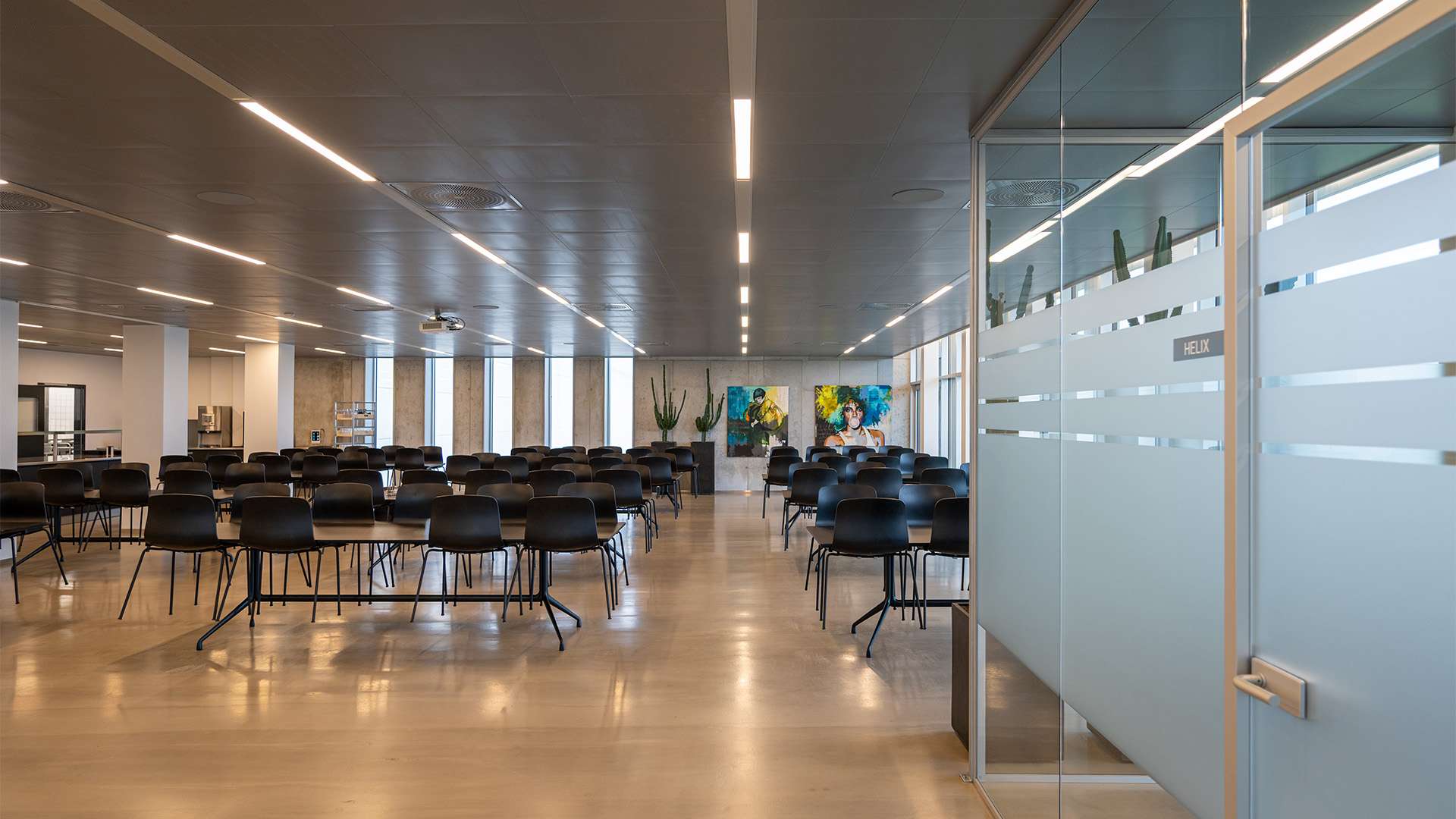
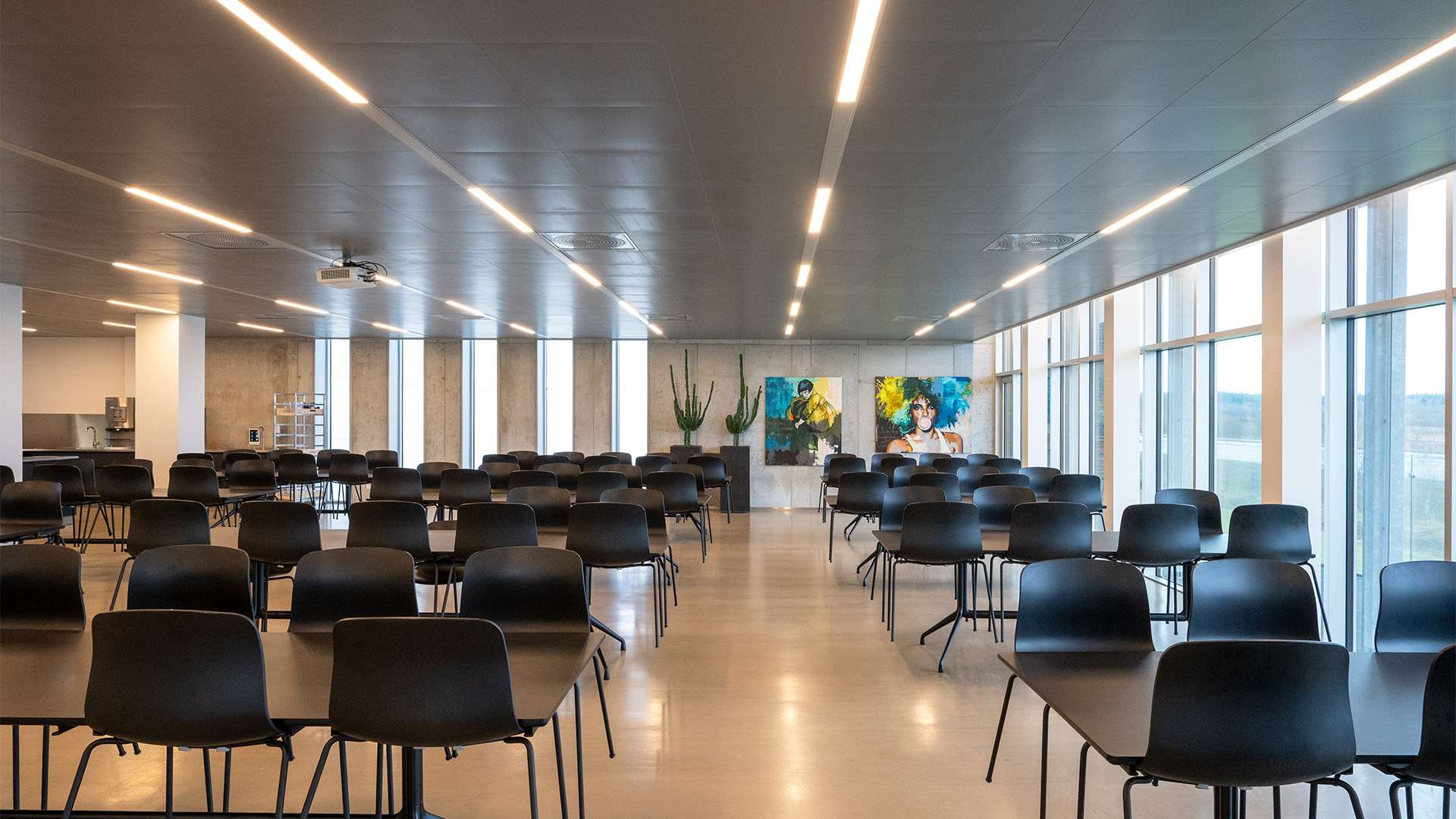
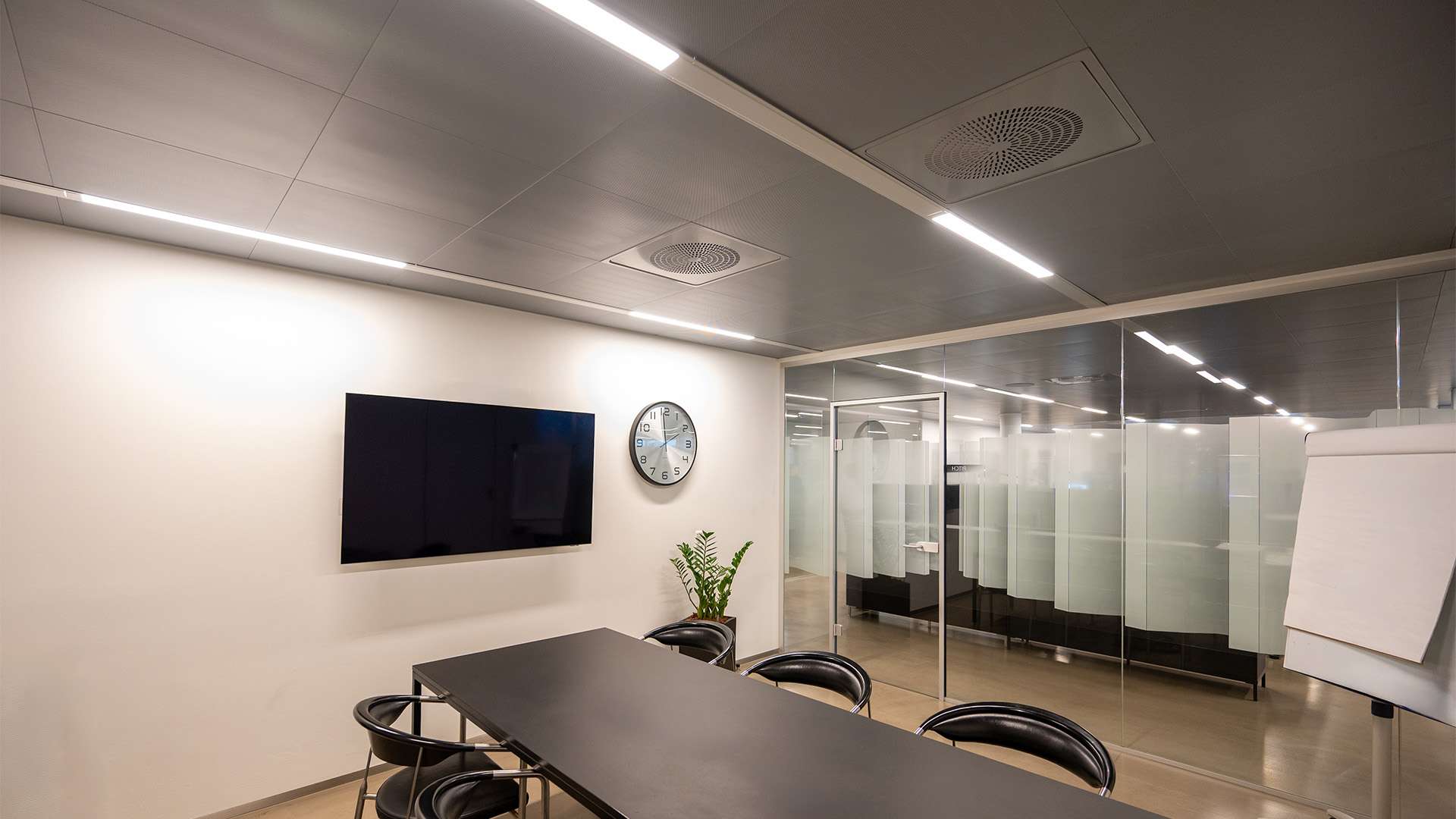
Ceiling-based radiant heating, by contrast, can be discreetly integrated into the room. By positioning the heating in the ceiling, both walls and floors remain free. This provides greater freedom in the interior design and makes it easier to work with flexible spaces, large glazed areas or a cleaner architectural expression.
As radiant heating does not create draughts, it also provides greater freedom when arranging the interior, as there is no need to account for potential draught discomfort.
At DAMPA, radiant heating can be integrated into ceiling-based solutions in which temperature, acoustics, design and ventilation are considered together. In this way, the ceiling becomes more than a finishing element of the building; it becomes an active part of the room’s overall functionality.
When is radiant heating relevant?
Radiant heating is particularly relevant in buildings where comfort, architecture and flexibility are important considerations. This especially applies to rooms where people spend longer periods of time, where there is a desire to reduce draughts and noise, or where a discreet heating solution without visible radiators is preferred.
Radiant heating is also relevant in rooms with high ceilings or large open areas. In these spaces, traditional air-based heating can be challenged by warm air rising and collecting beneath the ceiling. With radiant heating, the energy is transferred more directly to people, floors, furniture and other surfaces within the occupied zone, resulting in a high degree of temperature uniformity throughout the room.
Is radiant heating always the best choice?
Radiant heating can be a highly comfortable and efficient form of heating, but it is not necessarily the right solution for every project.
The choice depends on factors including the use of the building, ceiling height, acoustic requirements, ventilation principle, controls and the desired architectural expression.
The heating system should therefore always be assessed as part of the overall indoor climate solution. It is not simply a matter of choosing a heating system, but of creating a room that works well for the people who will use it.
Would you like to know more?
Are you considering whether radiant heating is relevant for a specific project, or would you like to learn more about our different solutions?
Please contact us for advice on how heating, acoustics, architecture and the indoor climate can be combined in one integrated solution.
You can contact Anders Rasmussen, Climate Sales Engineer, directly by email at agr@dampa.dk or by phone on +45 6376 1312 – or Per Andersen, Climate Segment Manager, by email at pan@dampa.dk or by phone on +45 2077 2902.
FAQ about radiant heating and convection heating
What is the difference between radiant heating and convection heating?
Radiant heating primarily transfers heat to people and surfaces in the room, while convection heating warms the air, which then distributes the heat throughout the room.
What is convection heating?
Convection heating is heating through the air. The air is heated by a heat source and moves around the room, distributing the heat through air circulation.
What is radiant heating?
Radiant heating is the transfer of thermal energy between surfaces. In DAMPA’s solutions, this is achieved using water-based systems in which warm water heats a ceiling surface or ceiling-mounted panel.
Is radiant heating better than convection heating?
Radiant heating and convection heating are two different principles suited to different types of projects. The right choice depends on the use of the building, its technical requirements and the desired level of comfort.
Does radiant heating create fewer draughts?
Yes. Radiant heating does not heat the air directly, which reduces air movement within the room. The solution can therefore contribute to an indoor climate with a lower risk of draughts and noise, although the building’s overall ventilation system and design also play an important role.