Water-based radiant heating provides comfortable and stable heating, where heat is distributed via the room’s surfaces rather than primarily through the air. The result is a calm indoor climate without draughts, where the heat should ideally not be felt directly.
In this article, you can read more about:
- what water-based radiant heating is
- how radiant heating works in practice
- the difference between radiant heating and traditional heating
Radiant heating is a comfortable and efficient way to heat a room. At DAMPA, we work with water-based radiant heating, where hot water circulates through pipes and heats the ceiling tile. From here, heat is emitted as radiation to people and surfaces in the room.
This means that heat is not primarily created by blowing warm air into the room. Instead, heat energy is transferred from the heated surface to the people, building elements and surfaces that are colder.
In practice, the aim is not for people to clearly feel the heat. On the contrary, the best radiant heating is often the kind you do not notice. The room should simply feel comfortable, stable and naturally tempered.
What is radiant heating?
Radiant heating is heat transfer between surfaces. In buildings, there is a constant exchange of heat between people, walls, floors, ceilings, windows and furniture. This means that our experience of temperature does not only depend on the air temperature, but also on the temperature of the surfaces surrounding us.
For example, a room may have an air temperature that seems suitable, yet still feel cool if large window sections, walls or floors are cold. This is because the body gives off heat to the cold surfaces. Conversely, a room can feel more comfortable if the surfaces around us have a more balanced temperature.
This is exactly the relationship that radiant heating makes use of. Rather than focusing solely on heating the air, radiant heating works with the overall heat balance in the room.
How does water-based radiant heating work?
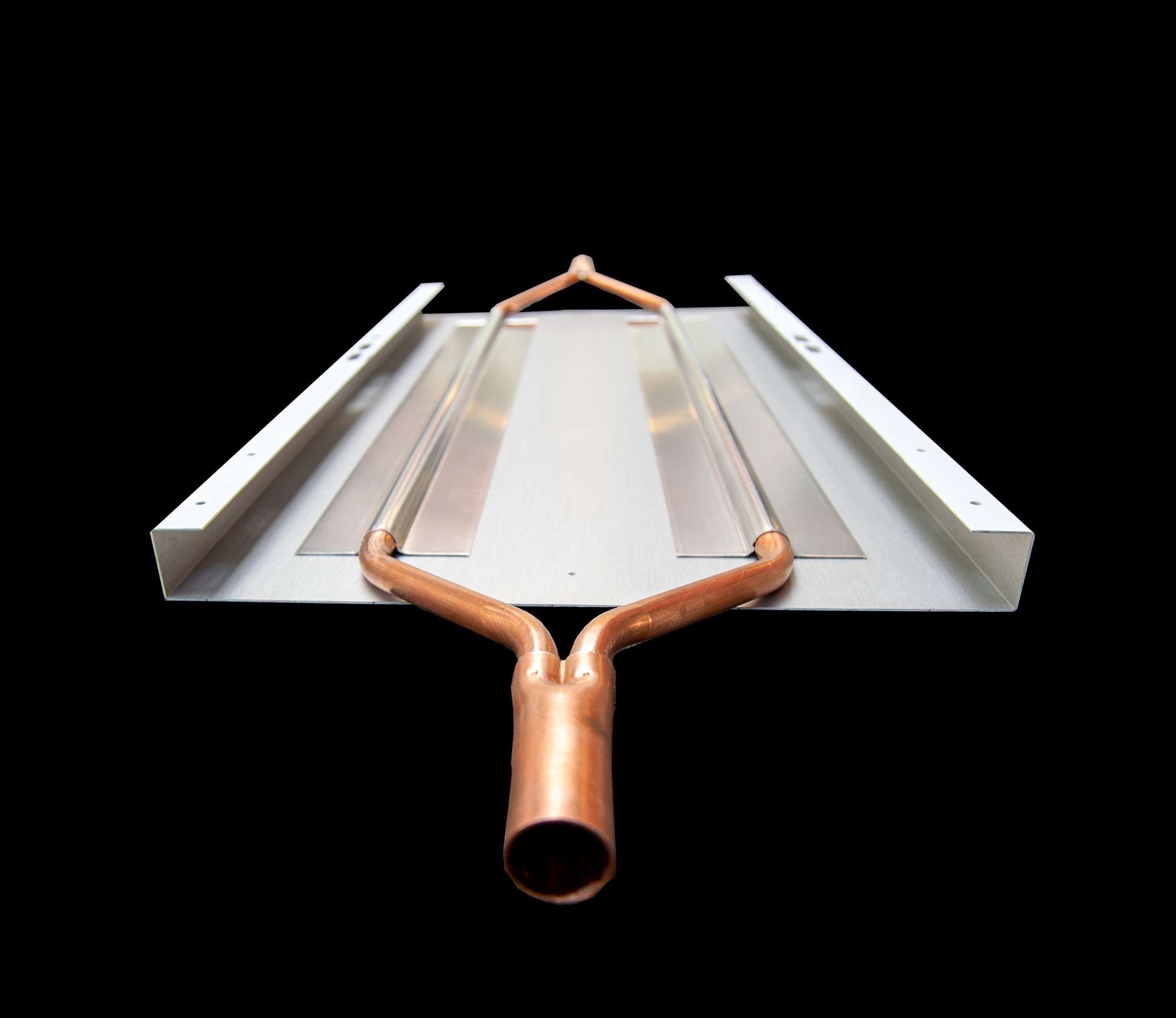
Water-based radiant heating works by circulating hot water through pipes integrated into the ceiling panel. The hot water transfers energy to the surface of the panel, which then emits heat into the room.
When the heat energy reaches a colder surface, it is absorbed and becomes heat. This may be people, floors, walls, tables or other surfaces in the room.
This does not mean that the air is not heated. When the room’s surfaces become warmer, they also release heat into the air. The difference is that comfort does not depend solely on the air temperature, but also on the temperature of the surfaces surrounding us.
This is why we often refer to the operative temperature. The operative temperature describes the temperature people actually experience when both air temperature and surface temperatures are taken into account.
Radiant heating should ideally not be noticeable
When radiant heating works optimally, it is not experienced as a strong or local heat source. You should not have the feeling of sitting beneath a heat lamp or close to a radiator.
Instead, the room should feel comfortably tempered. The body is constantly giving off heat to its surroundings. If the room’s surfaces are cold, the body gives off more heat, and the room may feel cool even if the air temperature is normal. If, on the other hand, the surfaces have a more comfortable temperature, the body’s heat loss is reduced and comfort is improved.
This is where water-based radiant heating has its strength. It contributes to a stable and comfortable temperature without necessarily creating a clearly noticeable sensation of heat. The result is a calmer and more natural indoor climate without draughts or noise.
Radiant heating compared with traditional heating
Many traditional heating systems primarily heat the air. This applies, for example, to systems where warm air is blown into the room, or where heat is distributed through air movement.
With air-based heating, temperature differences can occur in the room. Warm air naturally rises, and in rooms with high ceilings, some of the heat can end up at the top of the room, where it does not necessarily contribute to comfort in the occupied zone.
Radiant heating works differently. Here, a larger proportion of the heat energy is transferred directly to people and surfaces. This can create a more even and comfortable heating experience with less need for air movement.
It can also reduce the risk of draughts and noise from technical installations, because comfort is not dependent to the same extent on moving large volumes of air around the room.
Why the ceiling is ideal for water-based radiant heating
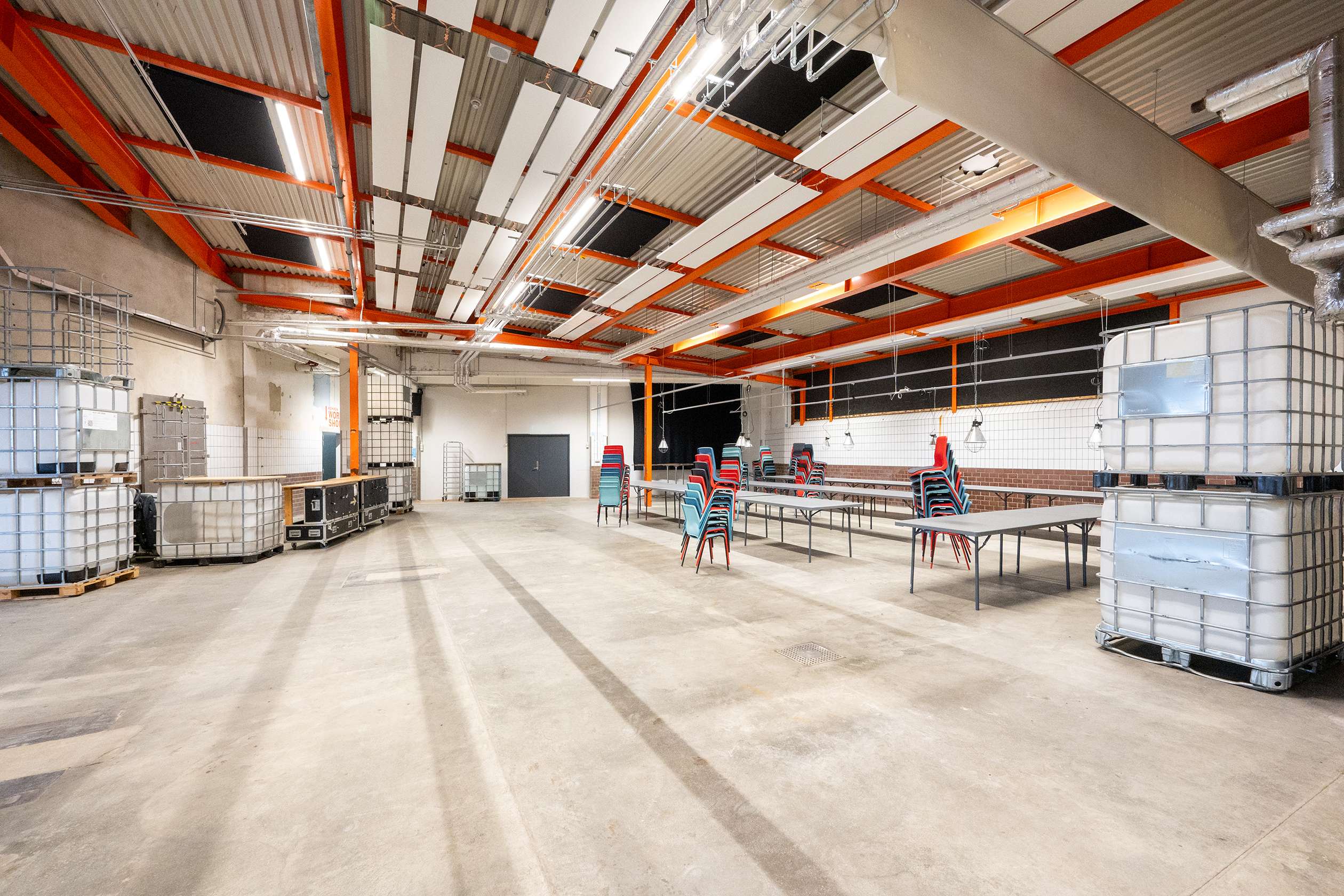
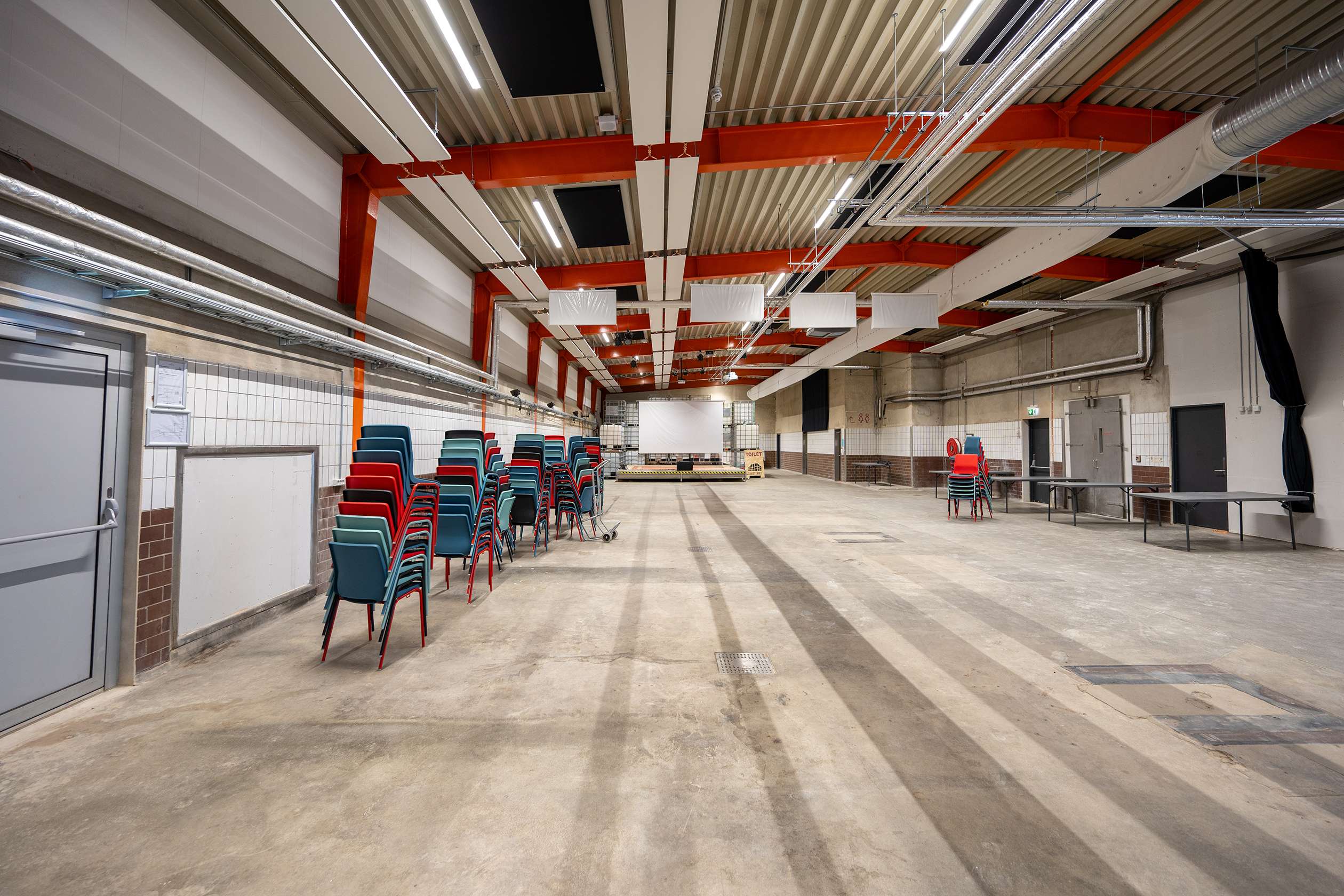
At DAMPA, we work with radiant heating from the ceiling. The ceiling is a large, free surface that is rarely blocked by furniture or fittings. This makes it well suited to distributing heat evenly throughout the room.
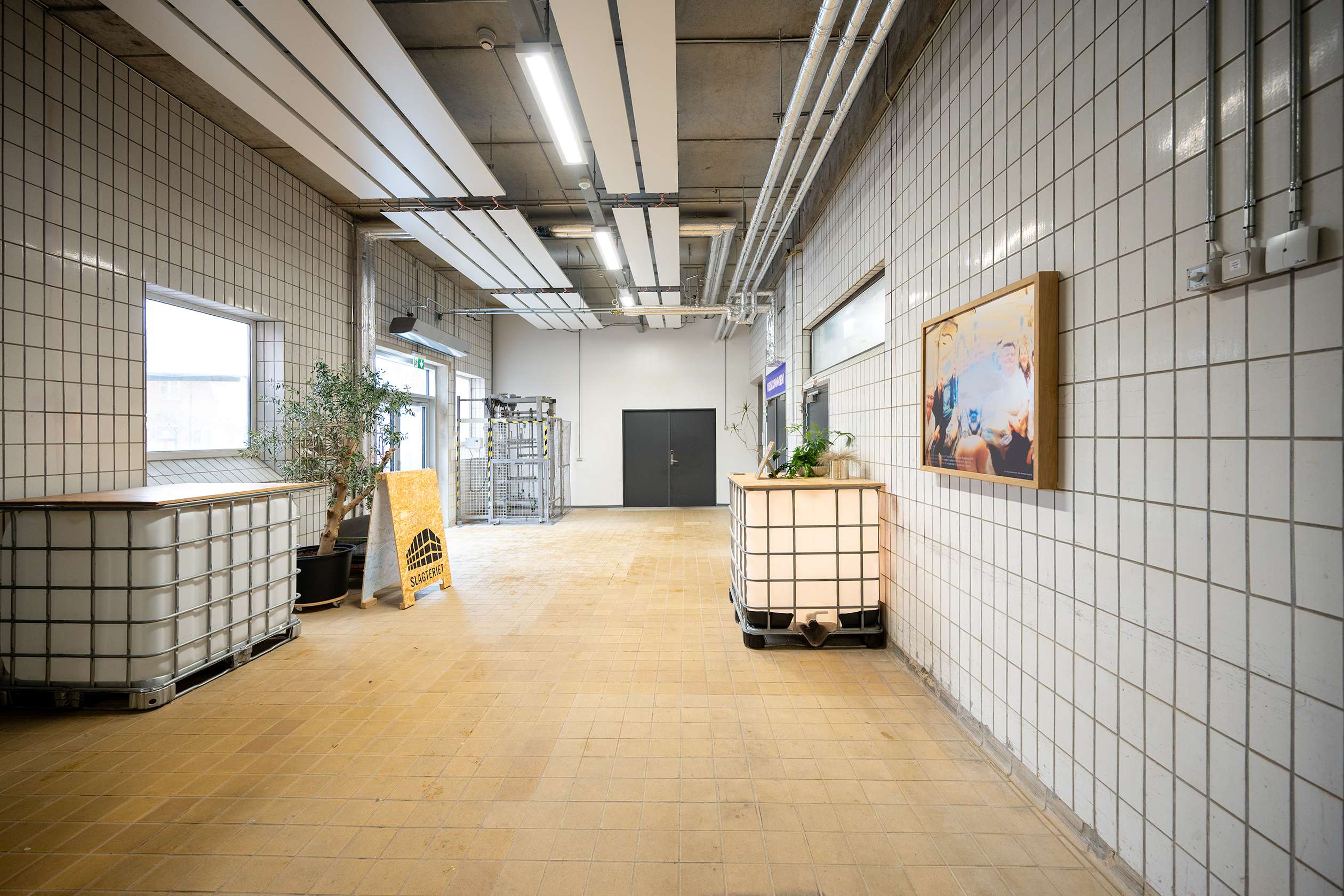
When radiant heating is placed in the ceiling, the heat can be distributed downwards towards the occupied zone without taking up wall or floor space. This provides greater freedom in the interior layout and a more discreet visual expression, as visible radiators or other local heating surfaces can be avoided.
Ceiling-based radiant heating is also relevant in rooms with high ceilings. With traditional heating using warm air, some of the heat can collect at the top of the room. With radiant heating, the energy is transferred to a greater extent to people and surfaces, where comfort is experienced.
At the same time, the ceiling can become an active part of the building’s overall indoor climate solution. This makes it possible to combine heating, acoustics, design and, in some cases, cooling and ventilation in one integrated solution.
DAMPA® Heat – water-based radiant heating from the ceiling
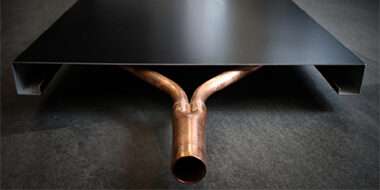
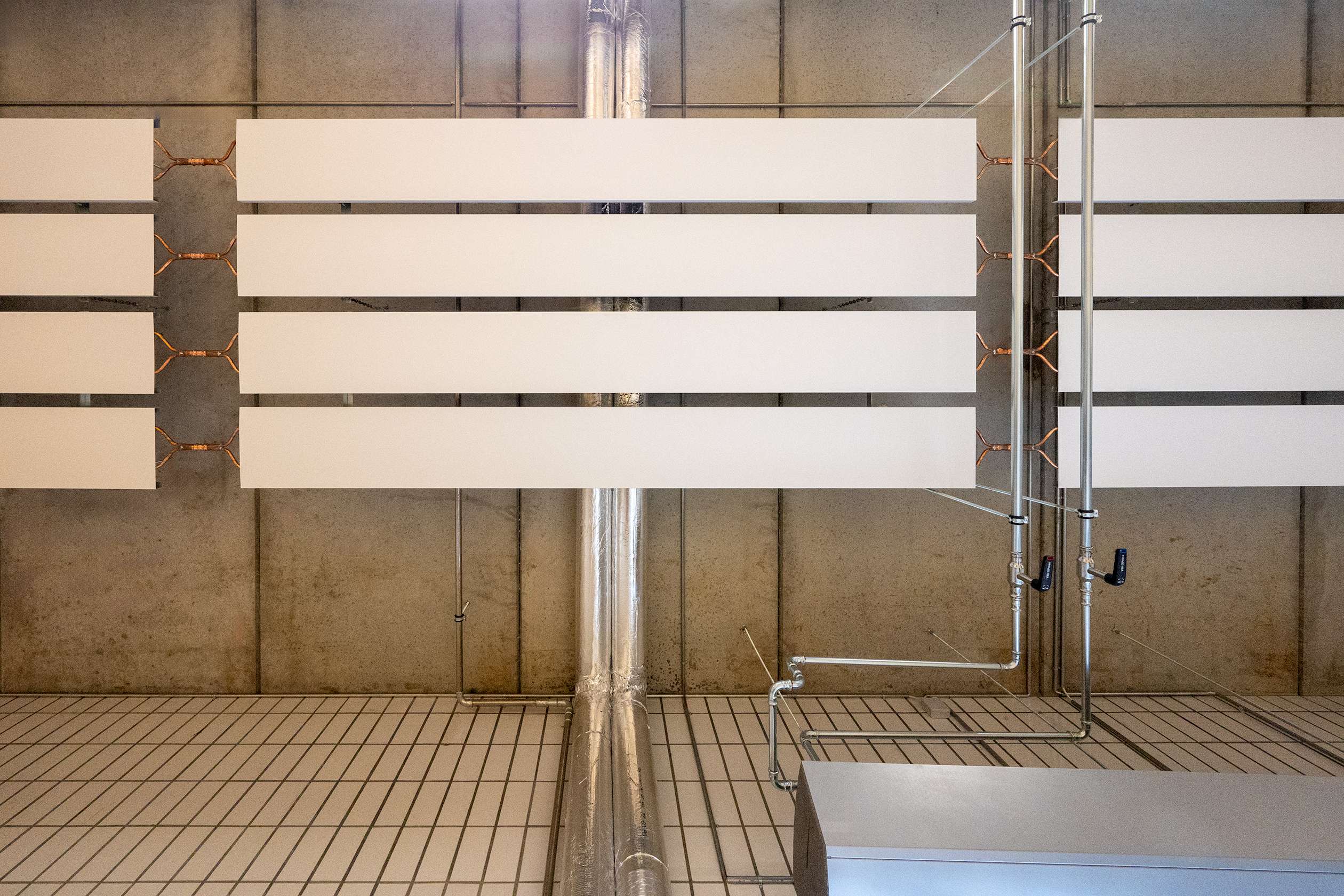
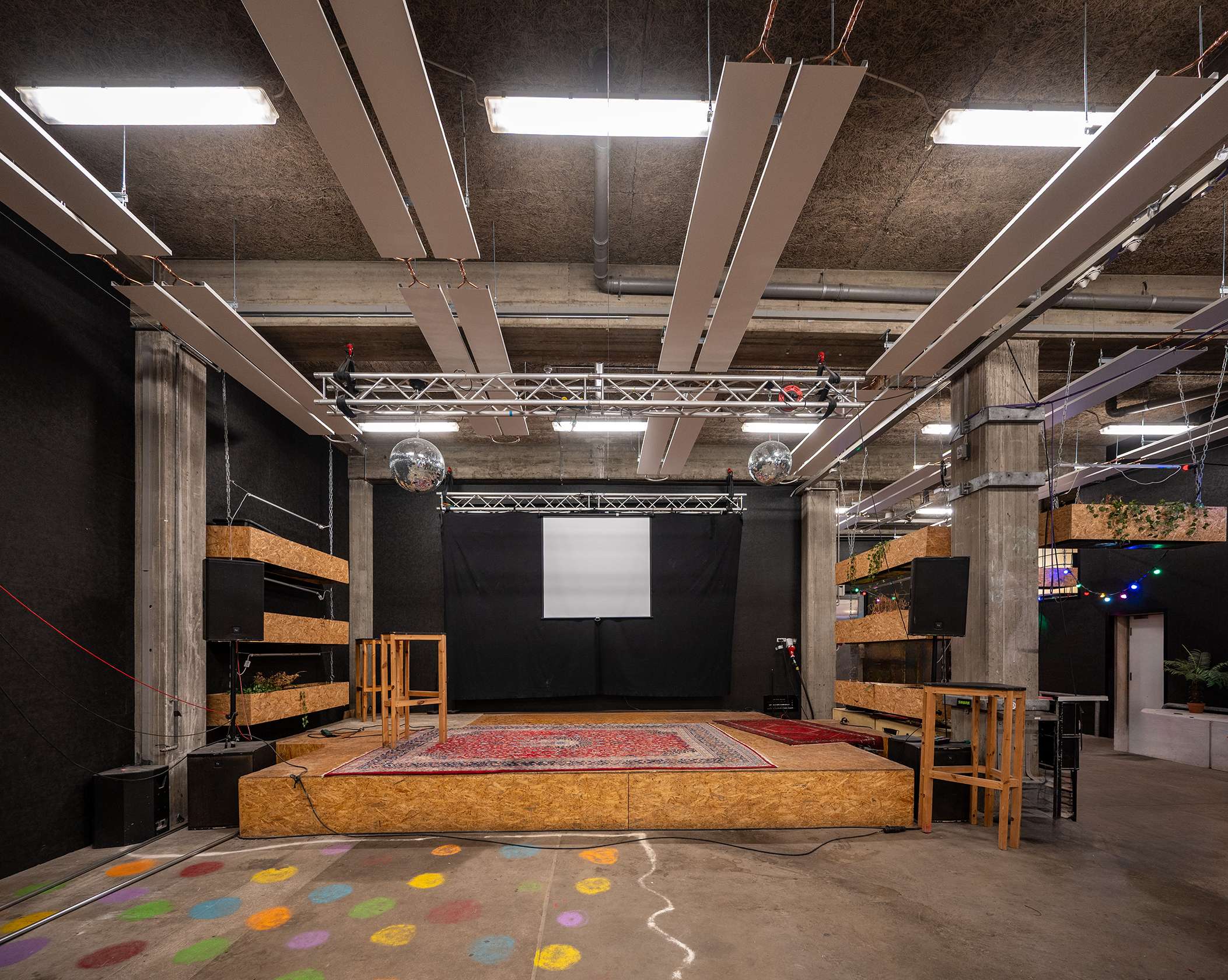
DAMPA® Heat is one of DAMPA’s solutions for water-based radiant heating. The solution consists of lightweight radiant heating panels with water-carrying pipes, which are mounted beneath the ceiling.
This makes DAMPA® Heat relevant for new builds, renovation and refurbishment projects where efficient and comfortable heating is required without necessarily replacing the entire ceiling system.
The panels can be adapted to the needs of the project in terms of length, width, spacing and colour, among other things. In this way, the heating solution can be discreetly integrated into the architecture and adapted to the function of the room.
DAMPA® Heat is particularly relevant when you want:
- water-based heating from the ceiling
- high comfort without draughts
- a discreet solution without visible radiators
- free wall and floor space
- a solution that can be used in both new and existing buildings
- flexibility in relation to room, architecture and technical requirements
Radiant heating, climate ceilings and indoor climate
A good indoor climate is not only about temperature. It is also about draughts, noise, air quality, acoustics and the overall experience of the room.
Here, ceiling-based solutions can be an advantage, because several functions can be considered together. In a climate ceiling, temperature regulation can be combined with acoustic inserts and diffuse ventilation. This means that the ceiling is not merely a passive building element, but an active part of the indoor climate solution.
Radiant heating contributes to comfort by reducing the dependency on air as the primary heat carrier. When heating takes place to a greater extent via surfaces, it is possible to create calmer temperature regulation with less risk of draughts and major temperature fluctuations.
This is one of the reasons why water-based radiant heating and climate ceilings are relevant in buildings where people spend many hours at a time.
Where is radiant heating particularly suitable?
Radiant heating is particularly relevant in buildings where comfort, operation and flexibility need to work together. This applies to commercial buildings, public buildings and larger spaces where it can be difficult to create an even temperature using traditional air-based heating alone.
The solution is especially well suited to rooms where people spend long periods of time, where there are high ceilings, or where a discreet heating solution is required without visible radiators and without taking up wall or floor space.
Particularly suitable application areas include:
- offices and meeting rooms
- schools, auditoriums and educational institutions
- hospitals, clinics and healthcare buildings
- hotels, conference facilities and communal areas
- canteens and lounge areas
- production and warehouse buildings and other larger rooms with high ceilings
- renovation and refurbishment projects
In production and warehouse buildings, sports halls and other large rooms, radiant heating can be a particular advantage because traditional heating with warm air is often challenged by large room volumes. Warm air rises and can collect beneath the ceiling, while radiant heating transfers energy to a greater extent to people, floors, furniture and other surfaces in the occupied zone.
In renovation and refurbishment projects, a ceiling-mounted solution can also be an advantage because water-based heating can be added without taking up wall or floor space. This provides greater freedom in the interior layout and can make the solution easier to integrate into existing buildings.
Benefits of water-based radiant heating
Water-based radiant heating can provide a range of benefits in new builds, renovations and refurbishment projects. The solution is particularly relevant in projects where comfort, energy efficiency, operation and architecture need to be considered together. One of the greatest benefits is comfort.
Water-based radiant heating can provide a comfortable and stable heating experience because heat does not depend solely on air temperature. Instead, heat energy is transferred to people and surfaces in the room, so comfort is experienced as more even and calm.
Because the solution does not require strong air movement to distribute heat, it can contribute to an indoor climate with fewer draughts, less noise and fewer temperature differences. This makes radiant heating particularly relevant in rooms where people spend long periods of time, or where high comfort is required throughout the day.
In rooms with high ceilings or large open areas, water-based radiant heating can also be an advantage because the energy is transferred to a greater extent to people, floors, furniture and other surfaces in the occupied zone. At the same time, walls and floors remain free when the heating is placed in the ceiling, while there are no draughts. This provides greater flexibility in the interior layout and a more discreet architectural expression.
With DAMPA® Heat, water-based radiant heating can also be mounted beneath the ceiling, making the solution relevant for new builds, renovations and refurbishment projects. And in projects where heating, cooling, acoustics and ceiling design need to be considered together, DAMPA® Climate Ceiling can be an integrated part of the overall indoor climate solution.
Is water-based radiant heating energy efficient?
Water-based radiant heating can be energy efficient because comfort depends more on the experienced temperature than on air temperature alone. When people and surfaces are heated directly, the room can often feel comfortable without the air necessarily needing to be heated in the same way as with traditional air-based systems.
However, the actual energy efficiency always depends on the building’s design, insulation, use, control strategy and overall technical system. Radiant heating should therefore be assessed as part of the building’s overall indoor climate and energy concept.
At DAMPA, water-based radiant heating can be incorporated into solutions where comfort, architecture, acoustics and technical installations are considered from the outset.
Would you like to know more about radiant heating and the possibilities?
Are you considering water-based radiant heating for a specific project, or would you like to know more about the difference between DAMPA® Heat and DAMPA® Climate Ceiling?
Please contact us for advice on how the ceiling can be used actively to create a comfortable, efficient and architecturally integrated indoor climate.
You can contact Anders Rasmussen, Sales Engineer Climate, directly by email at agr@dampa.dk or by phone on +45 6376 1312, or Per Andersen, Segment Manager Climate, by email at pan@dampa.dk or by phone on +45 2077 2902.
FAQ about radiant heating
What is radiant heating?
Radiant heating is heat that is transferred between surfaces. In DAMPA’s solutions, this is done using water-based systems, where hot water heats a ceiling-mounted panel. Read more about the different solutions here.
How does water-based radiant heating work?
Water-based radiant heating works by circulating hot water through pipes and heating a surface. The surface then emits heat to people and surfaces in the room.
Should you be able to feel radiant heating?
Not necessarily. When radiant heating works optimally, it is not experienced as a distinct heat source, as heat exchange takes place without draughts. The room should simply feel comfortable and stable in temperature.
Does radiant heating heat the air?
Radiant heating primarily heats people and surfaces. When the surfaces become warmer, they also release heat into the air. Comfort therefore depends not only on the air temperature, but also on the room’s surface temperatures.
Why is radiant heating used from the ceiling?
The ceiling is a large, free surface that is rarely blocked by furniture. It is therefore well suited to distributing heat evenly throughout the room. At the same time, walls and floors remain free, providing greater flexibility in the interior layout.
Where is water-based radiant heating typically used?
Water-based radiant heating is particularly relevant in offices, meeting rooms, warehouse and production halls, schools, hospitals, hotels, canteens, auditoriums and other commercial or communal spaces where comfort and efficient heating are important.
Is radiant heating relevant in rooms with high ceilings?
Yes. In rooms with high ceilings, traditional warm air can collect at the top of the room. Radiant heating transfers energy to a greater extent to people and surfaces in the occupied zone.
Can water-based radiant heating be used in renovation projects?
Yes. DAMPA® Heat can be relevant in renovation and refurbishment projects because the solution can be mounted beneath the ceiling and add water-based radiant heating without necessarily changing the entire ceiling construction.