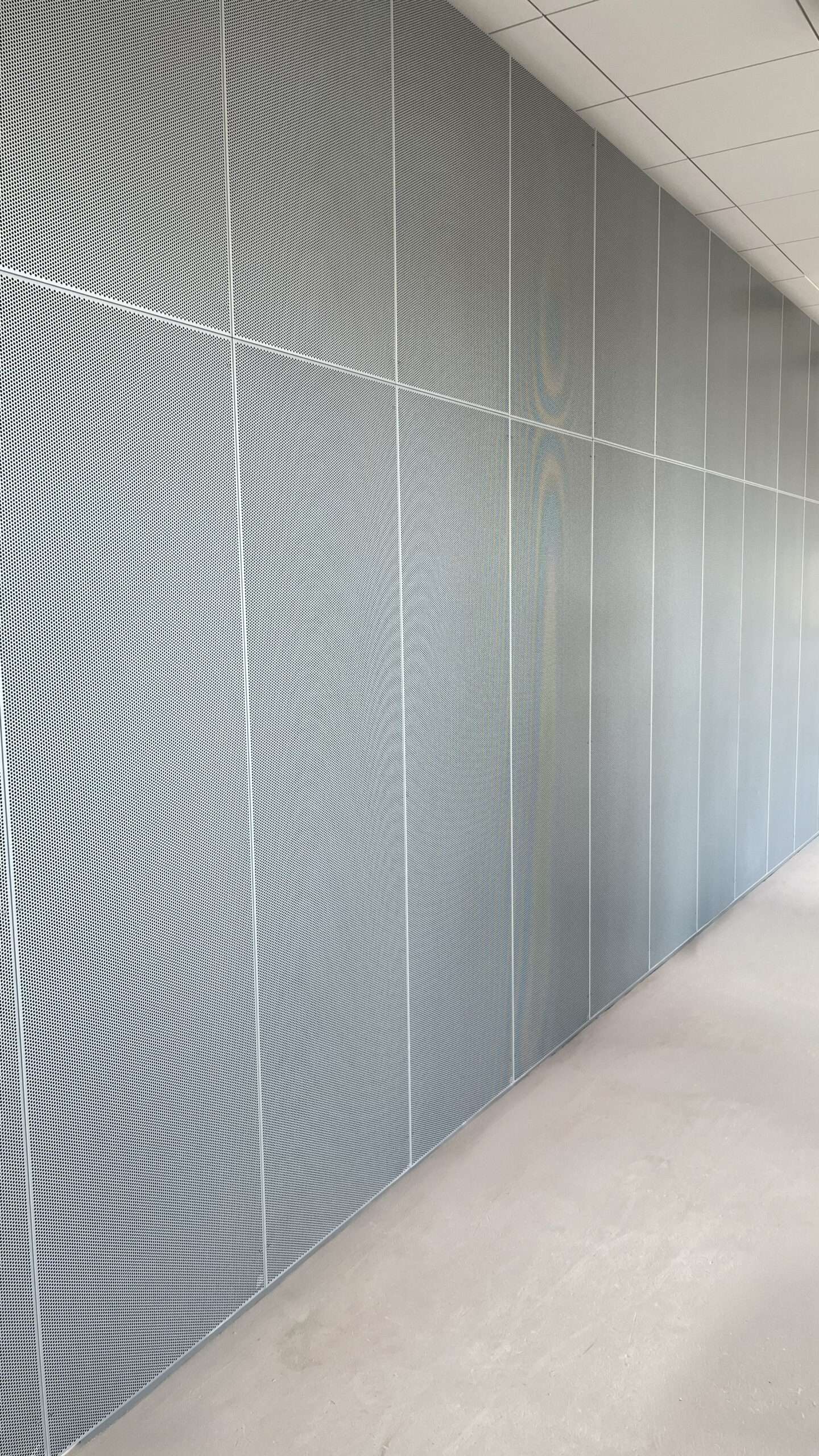
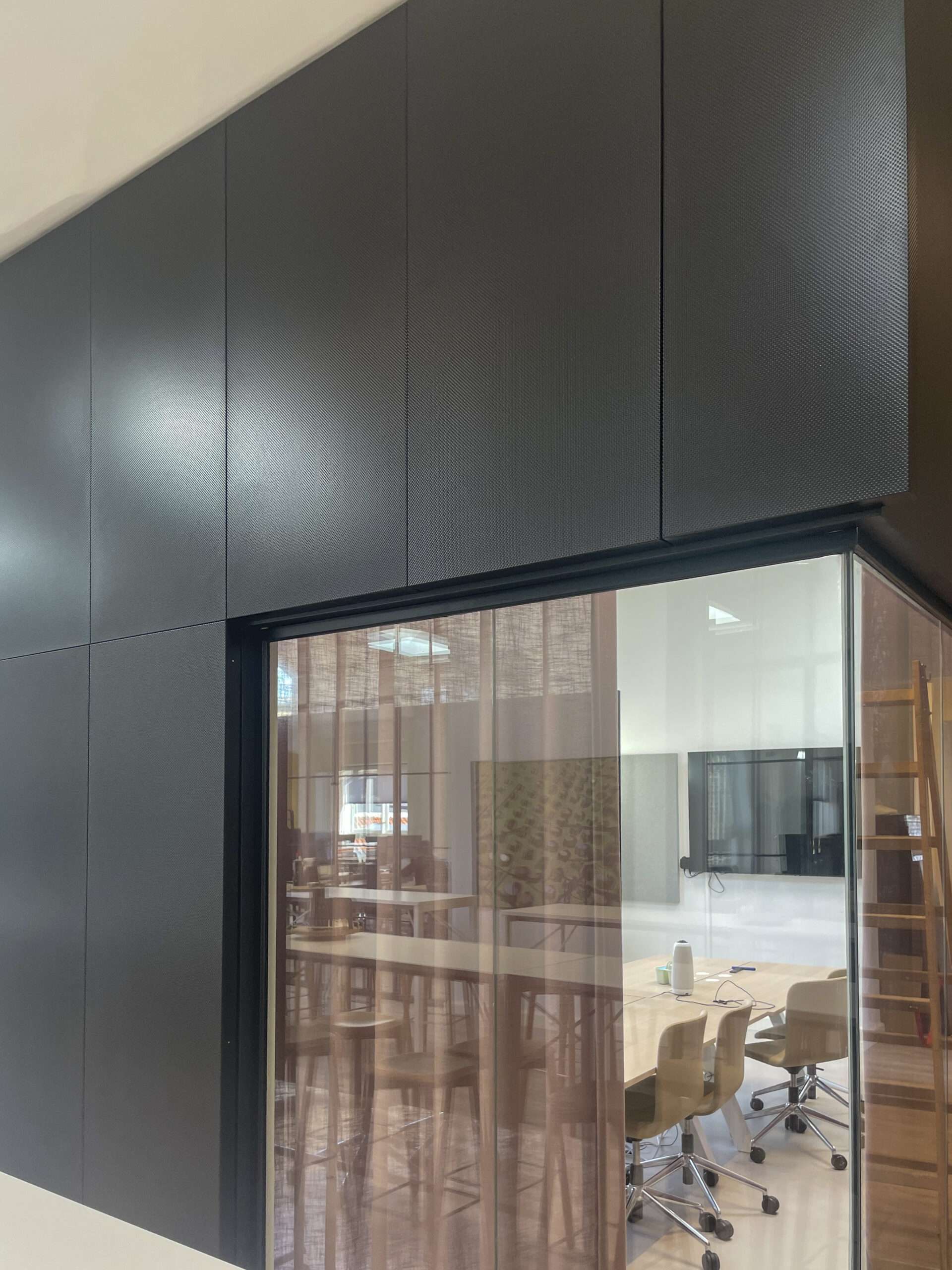
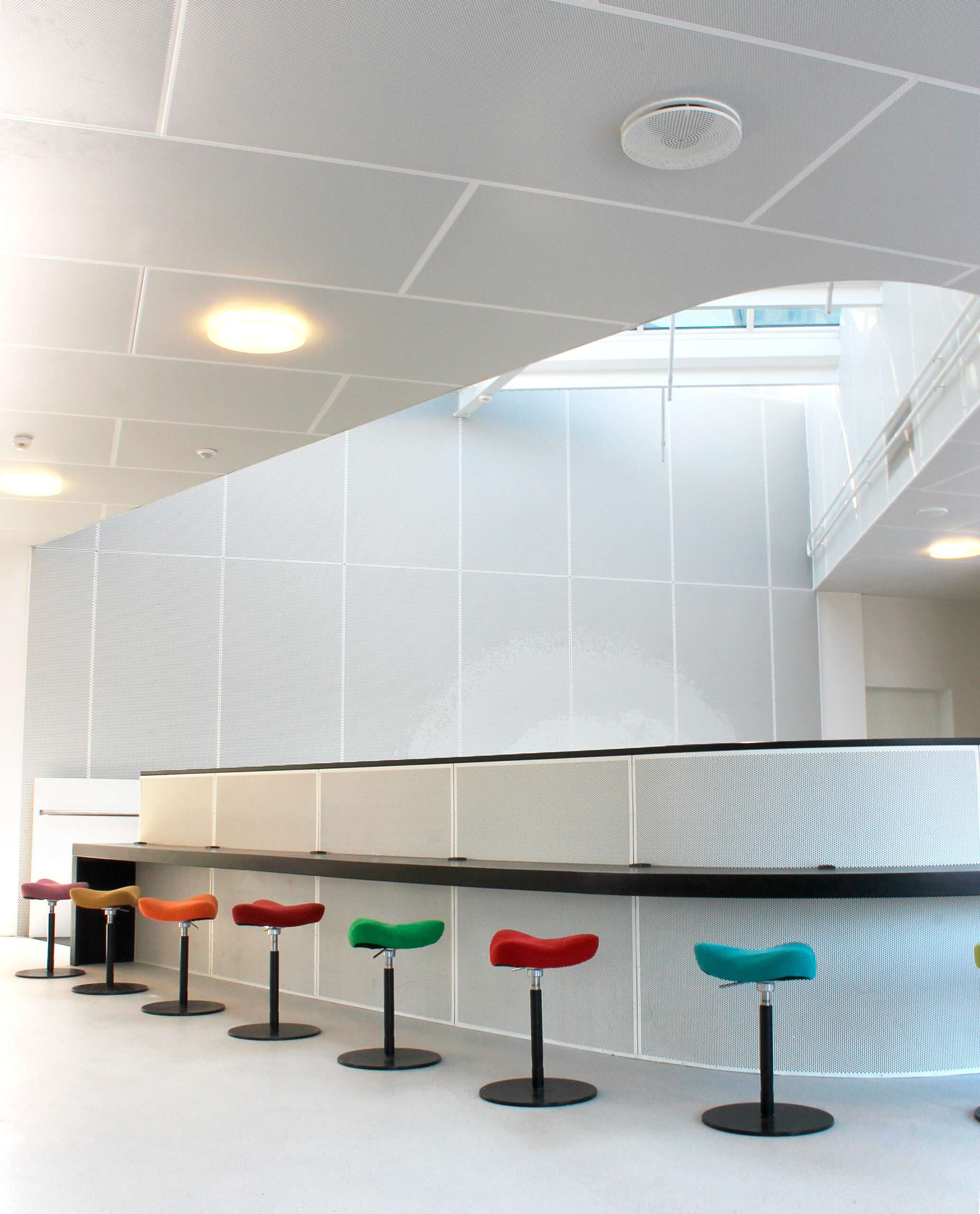
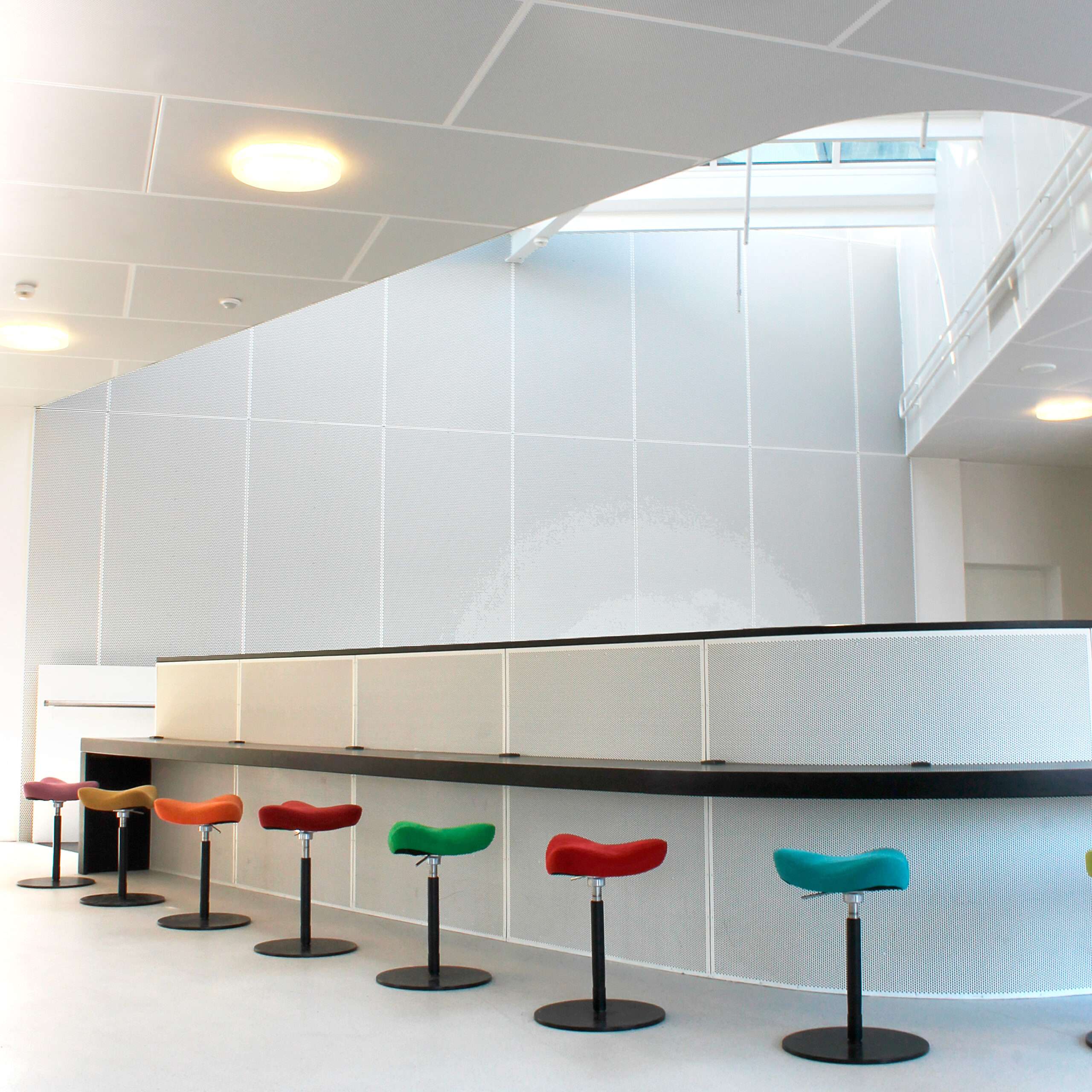
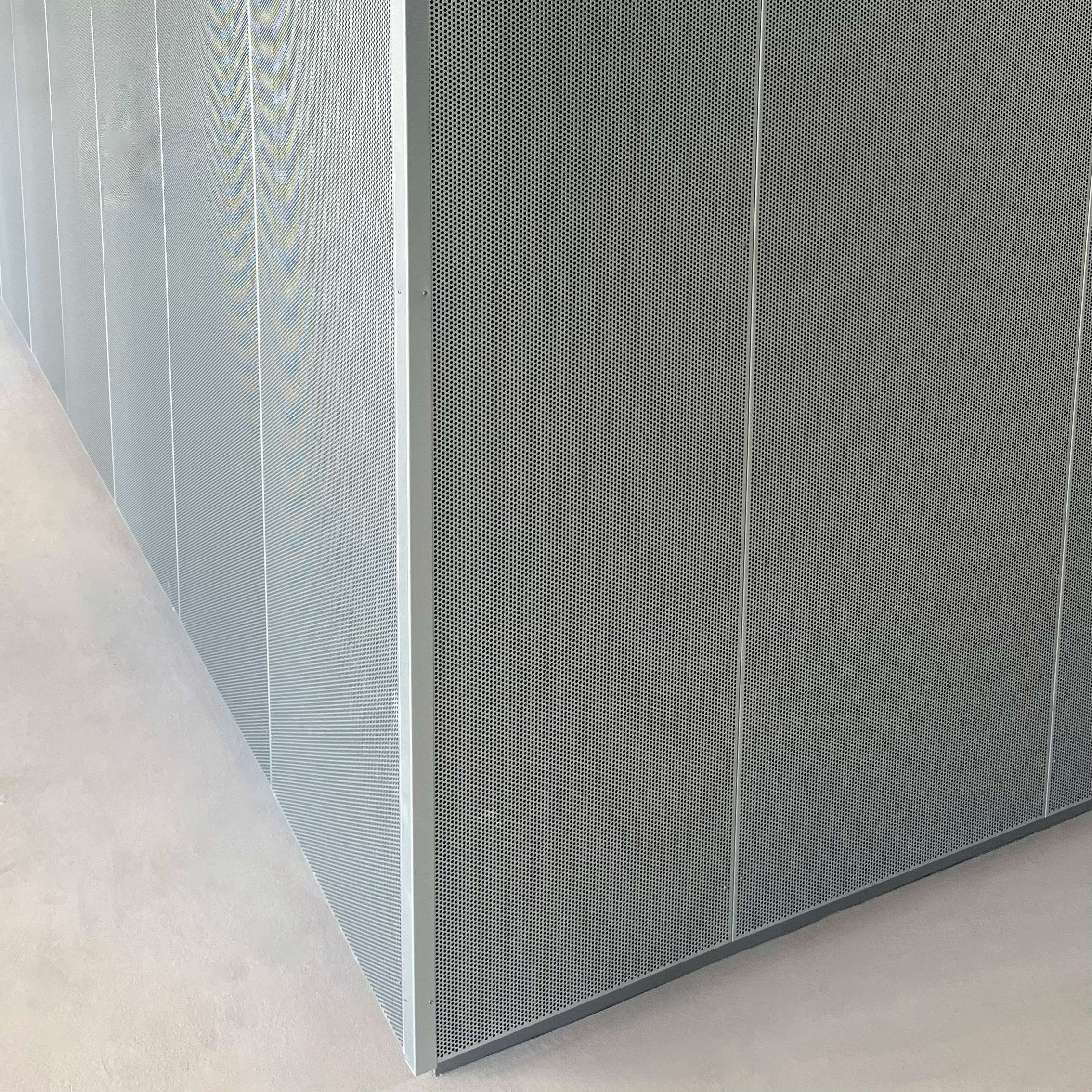
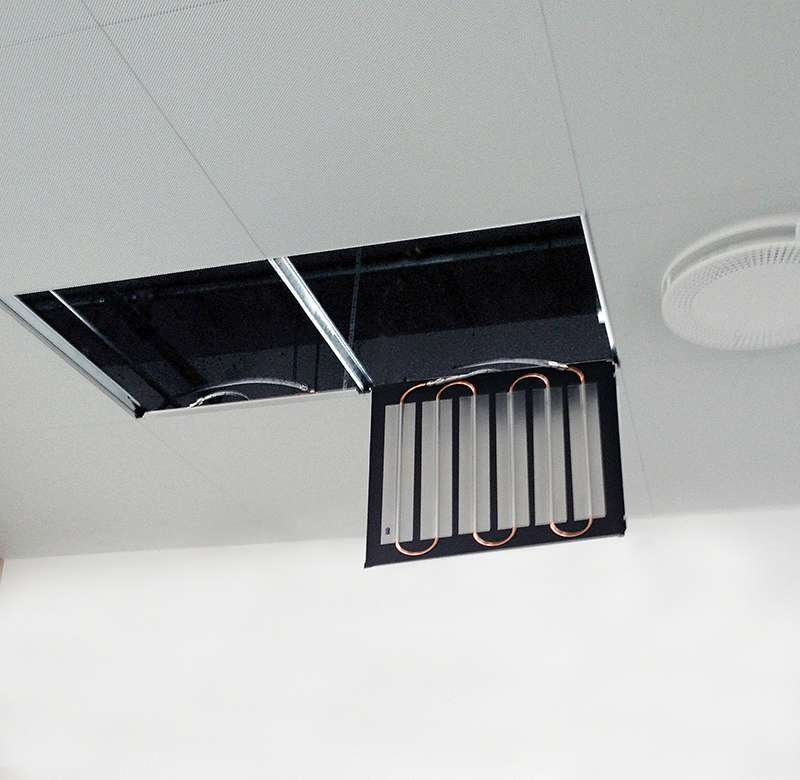
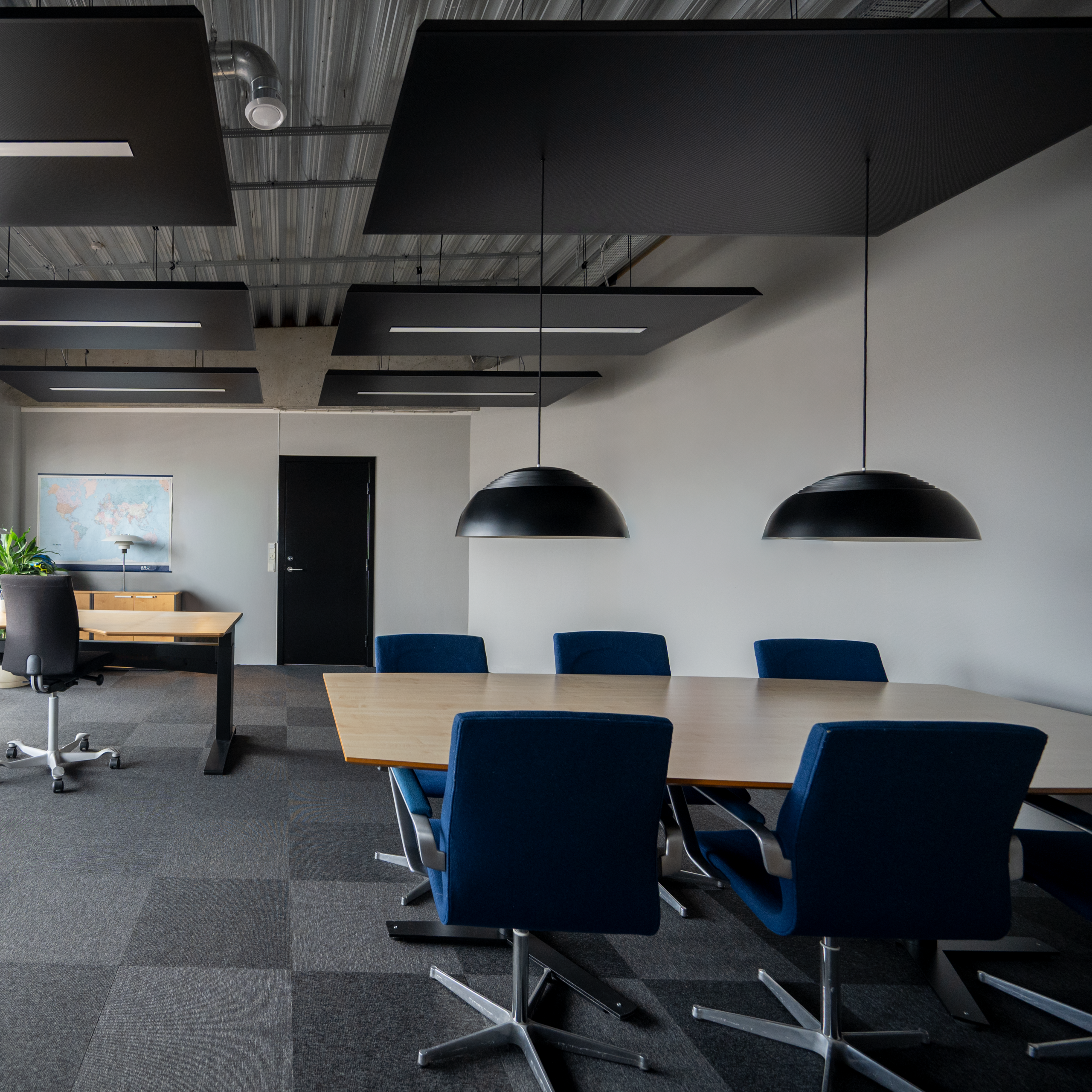
With DAMPA® Silent Wall, you can give the walls a distinct role in the overall design while improving the acoustics of the space.
The full-wall panels consist of individual steel panels that are assembled to form one continuous, streamlined surface. The solution makes it possible to create long, calm stretches of wall that complement and support the overall interior design.
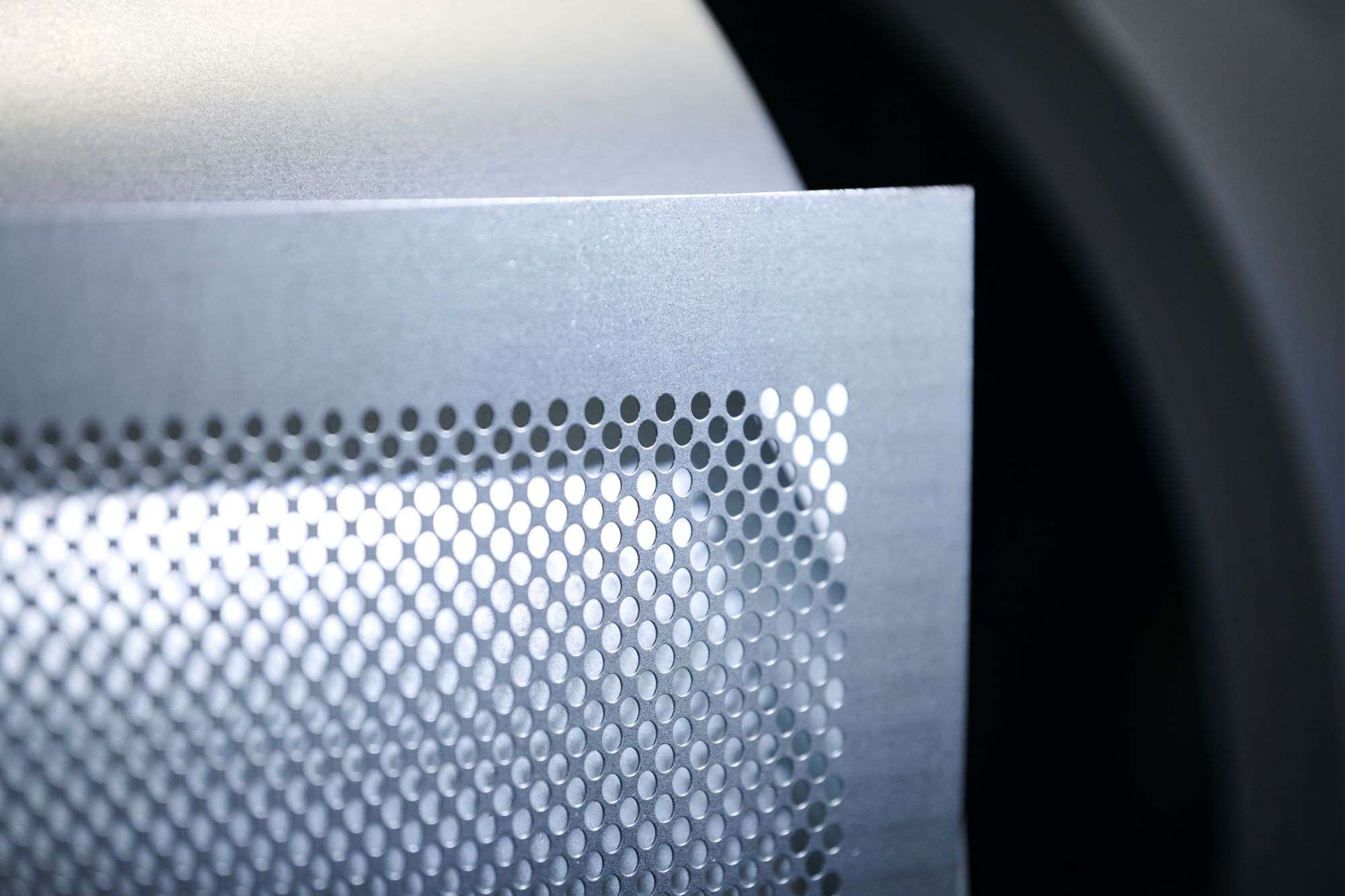
The appearance can be tailored to the individual project through a choice of colours, perforations and finishes, including all RAL colours, clear-lacquered galvanised steel, or completely unique solutions with digital print. This allows DAMPA® Silent Wall to appear discreet and neutral or add a more distinctive and characterful expression to the interior, depending on the function of the space and the architectural vision.
In addition to serving as a decorative element, the wall cladding can also help improve the acoustics of the space. Depending on the selected configuration, perforation and insulation behind the panels, the full-wall panels can be supplied in acoustic class A, B or C.
DAMPA® Silent Wall therefore functions both as decorative wall cladding and as a functional acoustic element.
Adaptations can also be made around doors and similar features. The full-wall panels are available in different variants, with variations in dimensions and suspension systems.
DAMPA® Silent Wall Clip-In
The Clip-In variant is based on the well-known DAMPA® Clip-In system, where a concealed suspension system is mounted directly onto the wall. The individual panels are then easily clicked into place without the use of tools.
The system ensures a streamlined wall surface with no visible suspension system, while also allowing the panels to be easily removed and reinstalled using the Clip-In disassembly tool.
DAMPA® Silent Wall Direct
The Direct variant is mounted directly onto the wall or supporting structure using screws or pop rivets. The full-wall panels can be supplied with or without a substructure and pop rivets, depending on the desired installation method and appearance.
This installation principle creates a more fixed solution and allows for larger panel sizes, making it possible to create larger, uninterrupted surfaces.