How can we be sure of the acoustic performance? And what exactly are acoustic classes? That’s what we’ll introduce in this article.
With more than 70 years of experience in acoustic solutions, we at DAMPA have built extensive expertise in acoustics.
When we talk about our different acoustic solutions, we often say that you can get them in the acoustic class that best matches your project. In this article, we’ll explain how that’s possible.
But first, let’s take a closer look at acoustic classes – also called sound absorption classes.
Introduction to Acoustic Classes
Acoustic classes are a way of categorising materials and products according to their sound-absorbing properties – that is, how effectively a material can reduce reverberation and noise within a room.
The most commonly used standard for classifying acoustic properties is ISO 11654, which specifically relates to sound-absorbing materials.
ISO 11654
The purpose of using ISO 11654 is to simplify and standardise the measurement of sound absorption, making it easier to compare materials directly.
ISO 11654 uses the weighted sound absorption coefficient (αw) – a single value that summarises a material’s overall sound-absorbing performance.
This value is calculated based on measurements taken at different frequencies, and it ranges from 0 to 1:
- αw = 0.0 means the material absorbs no sound.
- αw = 1.0 means the material absorbs all sound.
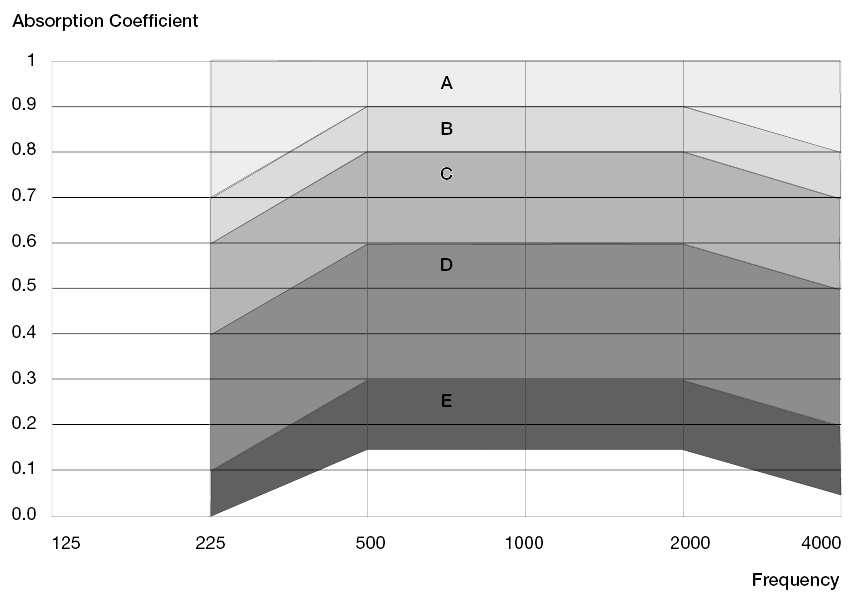
Based on these measurements, materials and products are categorised into the following acoustic classes:
- Class A: Materials with αw from 0.90 to 1.00
- Class B: Materials with αw from 0.80 to 0.85
- Class C: Materials with αw from 0.60 to 0.75
- Class D: Materials with αw from 0.30 to 0.55
- Class E: Materials with αw from 0.15 to 0.25
- Unclassified: Materials with αw below 0.15 absorb so little sound that they are not classified.
Get the Acoustic Class That Fits Your Project
“You can get the product in the acoustic class that suits your project” and “available in acoustic classes A, B and C” are phrases we often use at DAMPA.
That’s because we can easily adjust the acoustic class of our different ceiling solutions using simple methods.
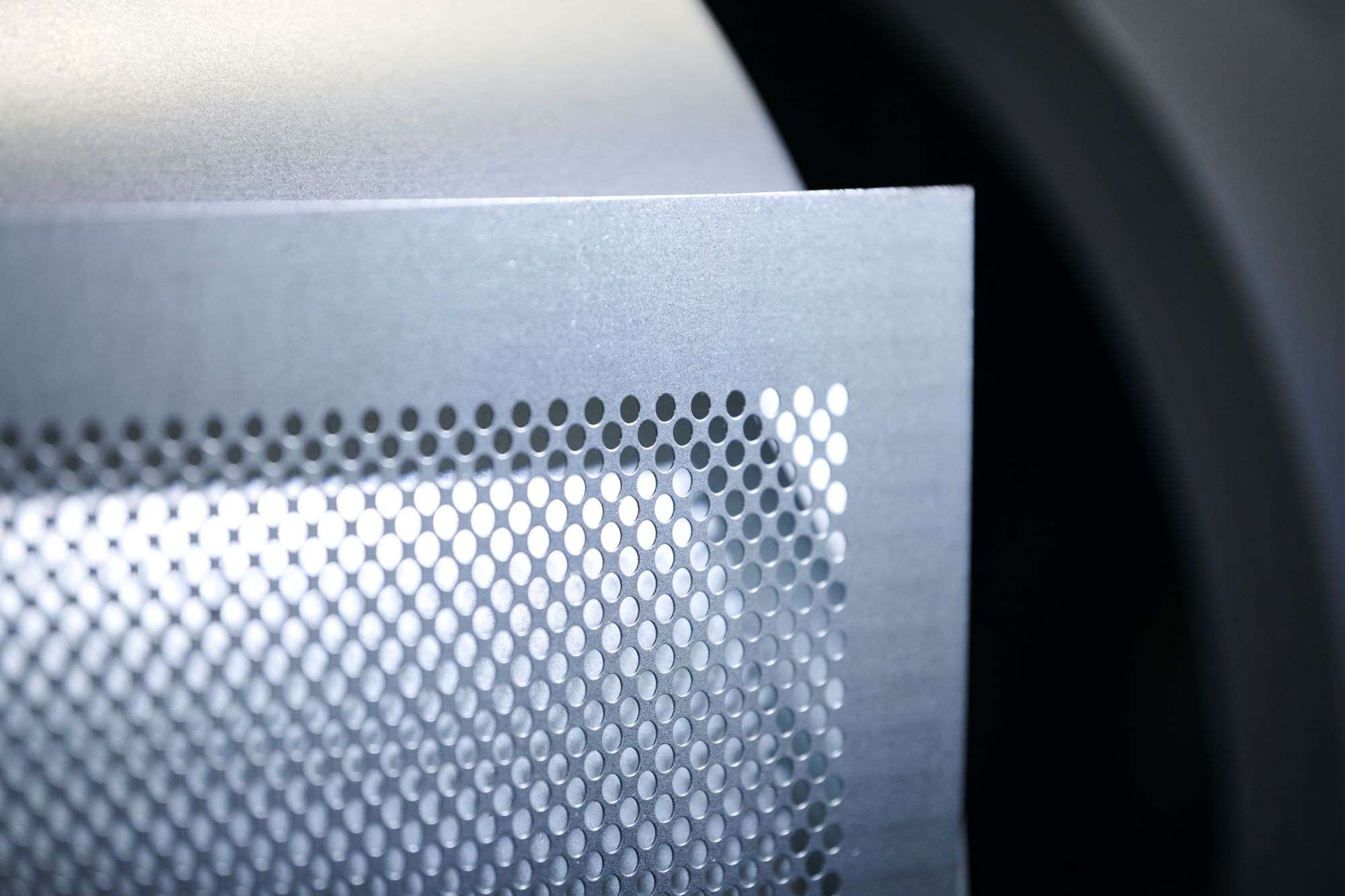
By perforating the metal in our acoustic products, we create the basis for achieving an acoustic solution in Class A, B or C.
You can read more about the impact of perforation in this article.
The specific acoustic class depends on the product itself, the open area of the perforation, the suspension height, and the type of backing used behind the ceiling solution.
On our product page, you can find detailed information about which acoustic classes are available for each particular product.
The only products where we cannot adjust the acoustic class are our DAMPA® Silent Board and DAMPA® Silent Board Flex acoustic wall panels – these are designed to perform at Class A by default.
Acoustic Measurements
At DAMPA, all our acoustic measurements are accredited and verified by an independent third party. These measurements cover all our products and demonstrate how we can achieve different classes depending on the chosen backing and suspension height.
You can find these accredited acoustic measurements listed under each product.
DAMPA’s Own Sound Room
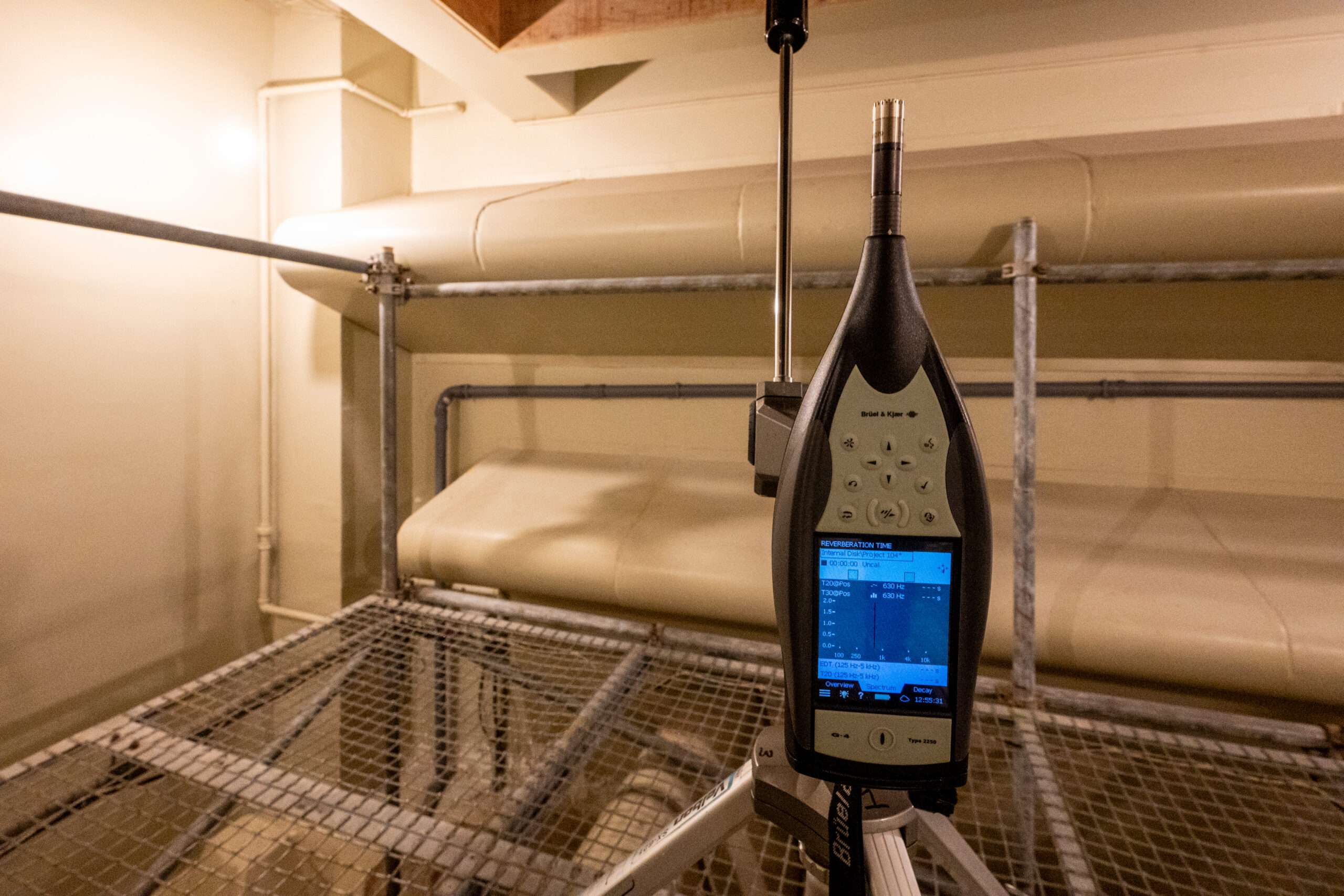
In addition to the accredited measurements, we also have the capability to carry out our own acoustic testing. We use this particularly during product development and when customers request custom perforations – allowing us to ensure that both the design and acoustic performance meet expectations.
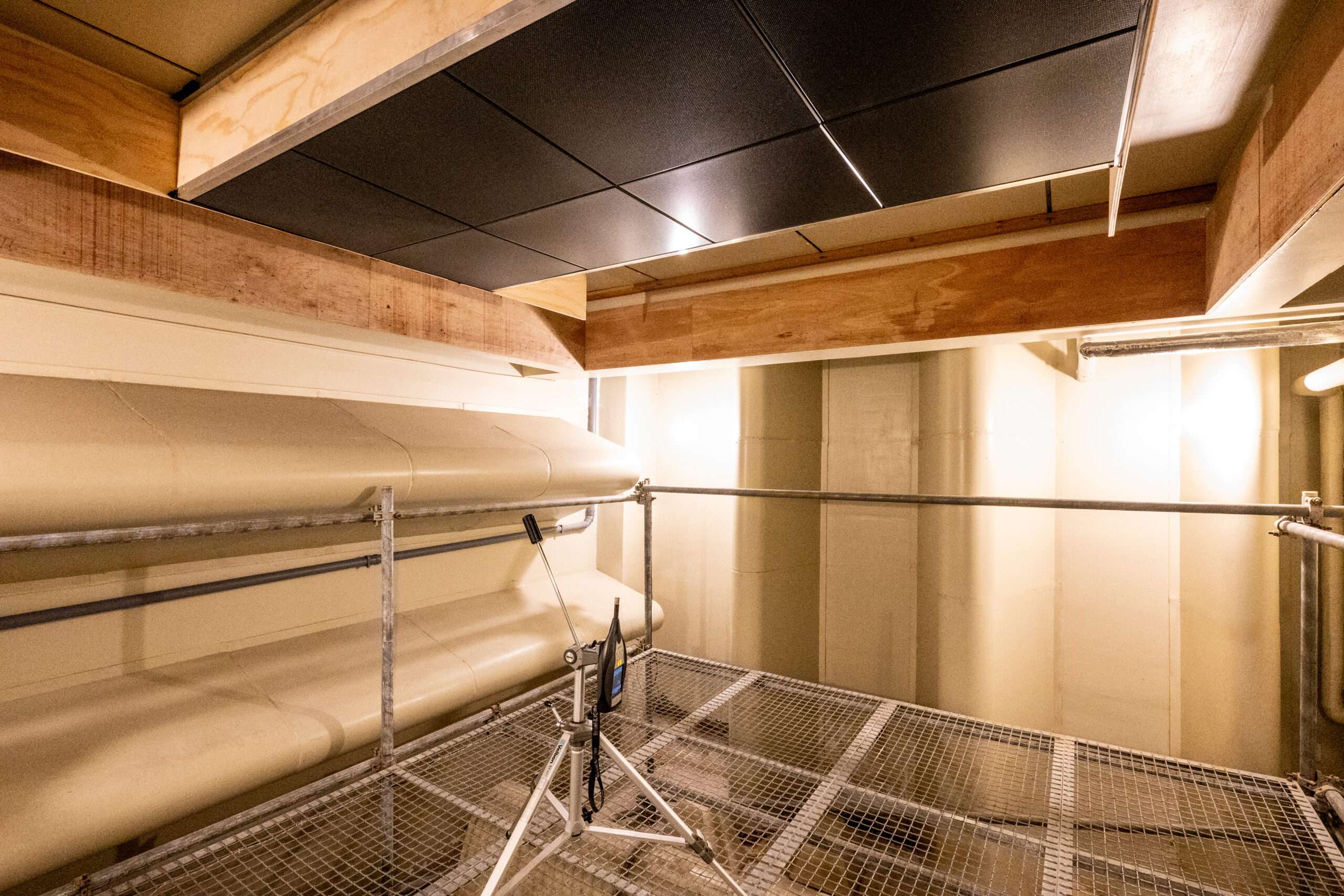
We’ve built a hard-surfaced sound room at our factory in Tommerup, Funen. The room is constructed according to ISO 354, ensuring that our measured acoustic results are consistent with the classes defined in ISO 11654.
For measurements, we use high-precision equipment from Brüel & Kjær (B&K 2250).
Want to Hear the Effect of Our Acoustic Wall Panels?
In the video below, our Project and Architect Advisor Lone Rold demonstrates the impressive effect of our DAMPA Silent Board wall panels.
Turn up the volume and hear the difference for yourself.