A climate ceiling is one of the most effective and comfortable ways to control indoor temperature. But how does it actually work, and what makes the DAMPA® Climate Ceiling different from other solutions on the market?
A healthy and comfortable indoor climate is crucial for well-being, productivity, and overall quality of life. We spend up to 90% of our time indoors, and a poor indoor climate can lead to both difficulties concentrating and health issues.
What is a climate ceiling?
A climate ceiling, also known as a cooling/heating ceiling, is a ceiling with integrated water-bearing elements. Cold or hot water flows through built-in copper pipes, turning the ceiling into an active climate component.
Instead of cooling or heating the air directly, as with traditional ventilation-based systems, the climate ceiling regulates the ceiling’s surface temperature via radiant heat. Thermal energy moves naturally from warmer surfaces to cooler ones through radiant exchange. This creates a natural and uniform comfort in the room, since the air is only indirectly warmed or cooled by the radiant heat.
How does a climate ceiling function?
Climate ceilings work primarily with radiant heat, which creates several significant differences compared to conventional cooling and heating systems:
- Cooling: When cold water flows through the pipes, the ceiling surface cools down. The room’s heat then “radiates” upwards toward the ceiling, creating a pleasant cooling effect, allowing excess body heat to dissipate without any draughts.
- Heating: When hot water circulates through the pipes, the ceiling radiates warmth down into the room. Since the radiation directly impacts people and surfaces, the space quickly feels comfortable, even if the air temperature is lower than with traditional heating.
Example: If 16 °C cold water circulates in the ceiling, the surface temperature will typically be 19-20 °C. Even if the room air measures 24 °C, people still experience the operative temperature as lower. This means comfort at higher air temperatures and lower energy consumption.
DAMPA® Climate Ceiling – unique D-pipe design
At DAMPA, we collaborate with our subsidiary TechoKlima on the DAMPA® Climate Ceiling, which is based on patented and highly efficient technology.
The core is our D-shaped copper pipe, wrapped in an aluminium foil and fully integrated into the ceiling panel. This construction is significantly different from standard products with round pipes that simply rest on top of the ceiling panel.
Advantages of the D-pipe:
- 360° contact: Maximum heat transfer between the water in the pipe and the ceiling’s metal surface.
- Uniform temperature distribution: No “cold zones” or uneven comfort in the room.
- Reduced material use: 37% less copper and 69% less aluminium compared to similar solutions, lowering production energy by 55%.
At the same time, the DAMPA® Climate Ceiling can be integrated into several of our acoustic metal ceilings, providing acoustic control, design freedom, and efficient climate control in one combined solution.
Perceived temperature and comfort
What makes climate ceilings special is that comfort does not depend on air temperature, but on the average temperature of the room’s surfaces. This is known as the operative temperature.
Typically, the operative temperature is perceived as 1.5-2 °C lower than the room air. This means the air temperature setpoint can be increased without compromising comfort, resulting in significant energy savings.
In addition, draught from ventilation systems, fan noise, and large temperature fluctuations throughout the day are avoided.
Where can climate ceilings be used?
Climate ceilings are particularly well suited for buildings where comfort and energy efficiency are a priority:
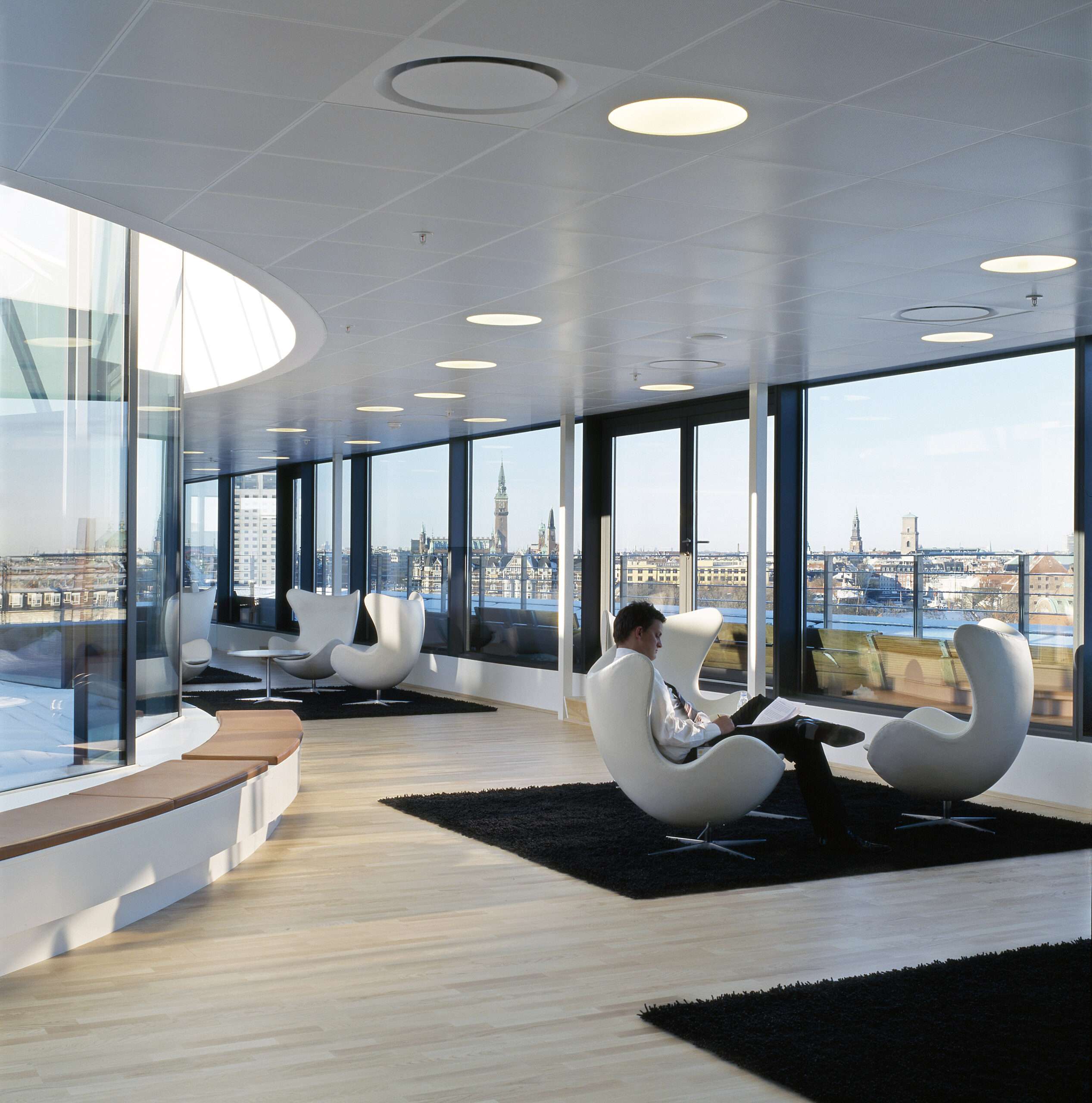
- offices and meeting rooms
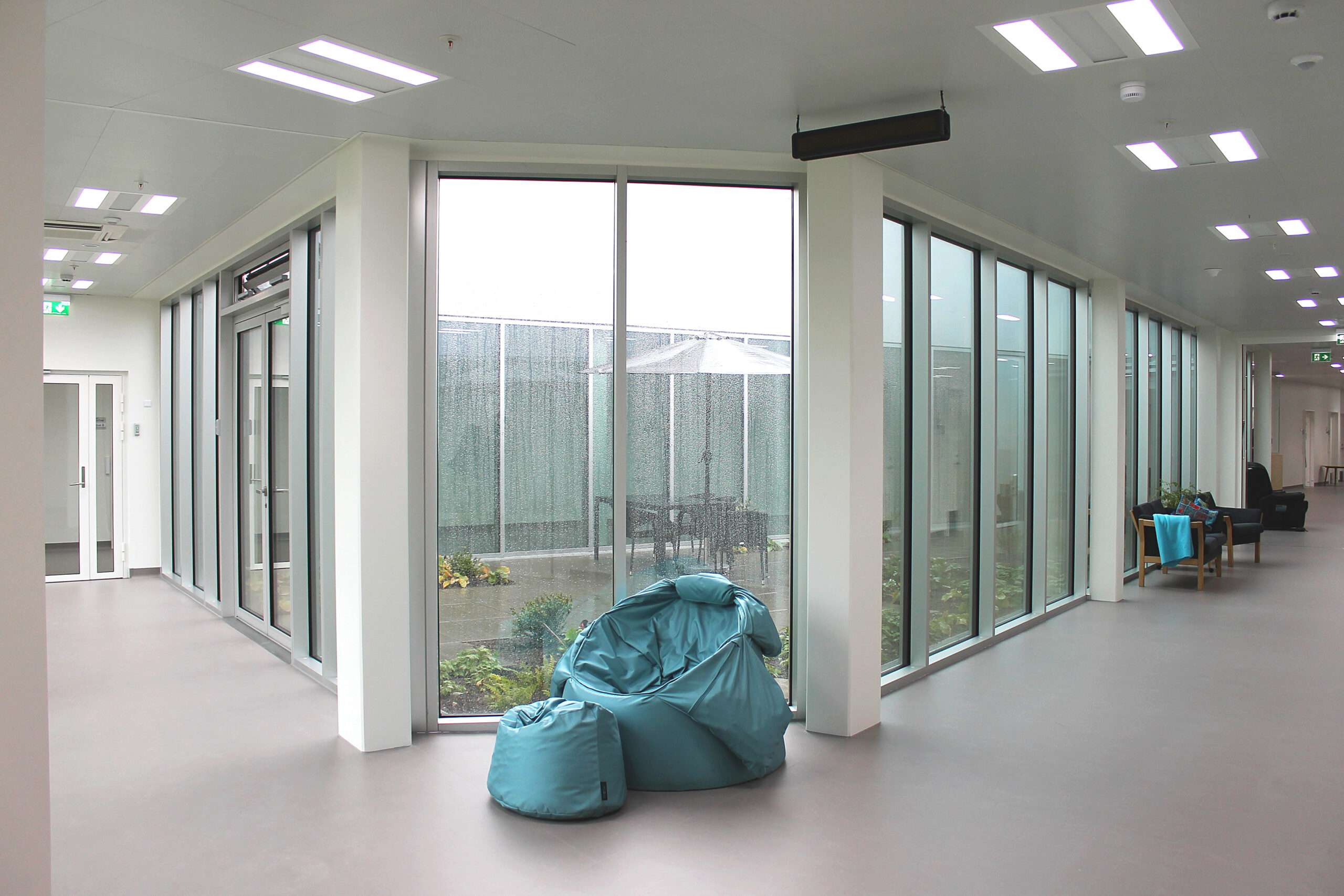
- hospitals and patient rooms
- hotels and conference facilities
- educational institutions and auditoriums
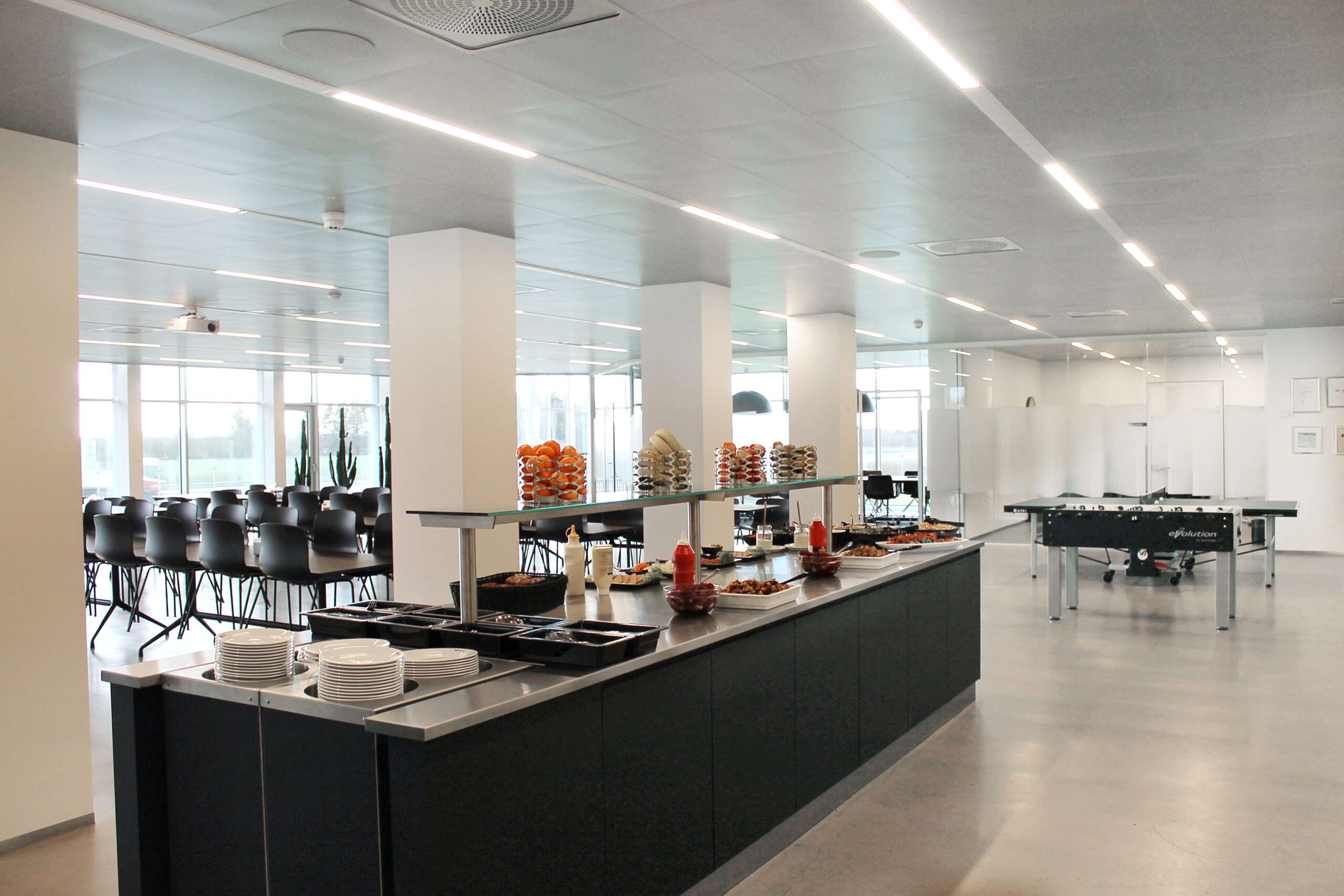
- canteens and other communal spaces
In rooms with high ceilings, climate ceilings have a particular advantage. Since the system works by radiation, it is not necessary to heat or cool the entire air volume first.
Benefits of the DAMPA® Climate Ceiling
A DAMPA® Climate Ceiling provides several benefits that enhance comfort, economy, and sustainability in a building:
- Economy and operation: Although installation requires a higher initial investment, the overall economy is significantly better. Operating costs are lower, installation and maintenance are simple, and the lifespan is long.
- Comfort without draught and noise: The system regulates temperature via radiation, ensuring a consistent and comfortable indoor climate without draughts or fan noise.
- Fast and efficient regulation: The metal ceiling’s high thermal conductivity ensures that temperature changes are felt quickly – much faster than in traditional systems.
- Flexible and space-saving: Climate ceilings free up floor and wall space, since radiators and visible installations can be avoided, creating more flexible rooms.
- Complete indoor climate solution: In combination with perforated metal ceilings, the DAMPA® Climate Ceiling can be integrated with diffuse ventilation, merging acoustics, air distribution, and temperature control into one system.
- Sustainability: Thanks to the patented D-pipe technology, significantly fewer resources are used in production, reducing energy consumption and CO₂ footprint. The solution is documented with an EPD and can contribute to certifications such as DGNB, BREEAM, and LEED.
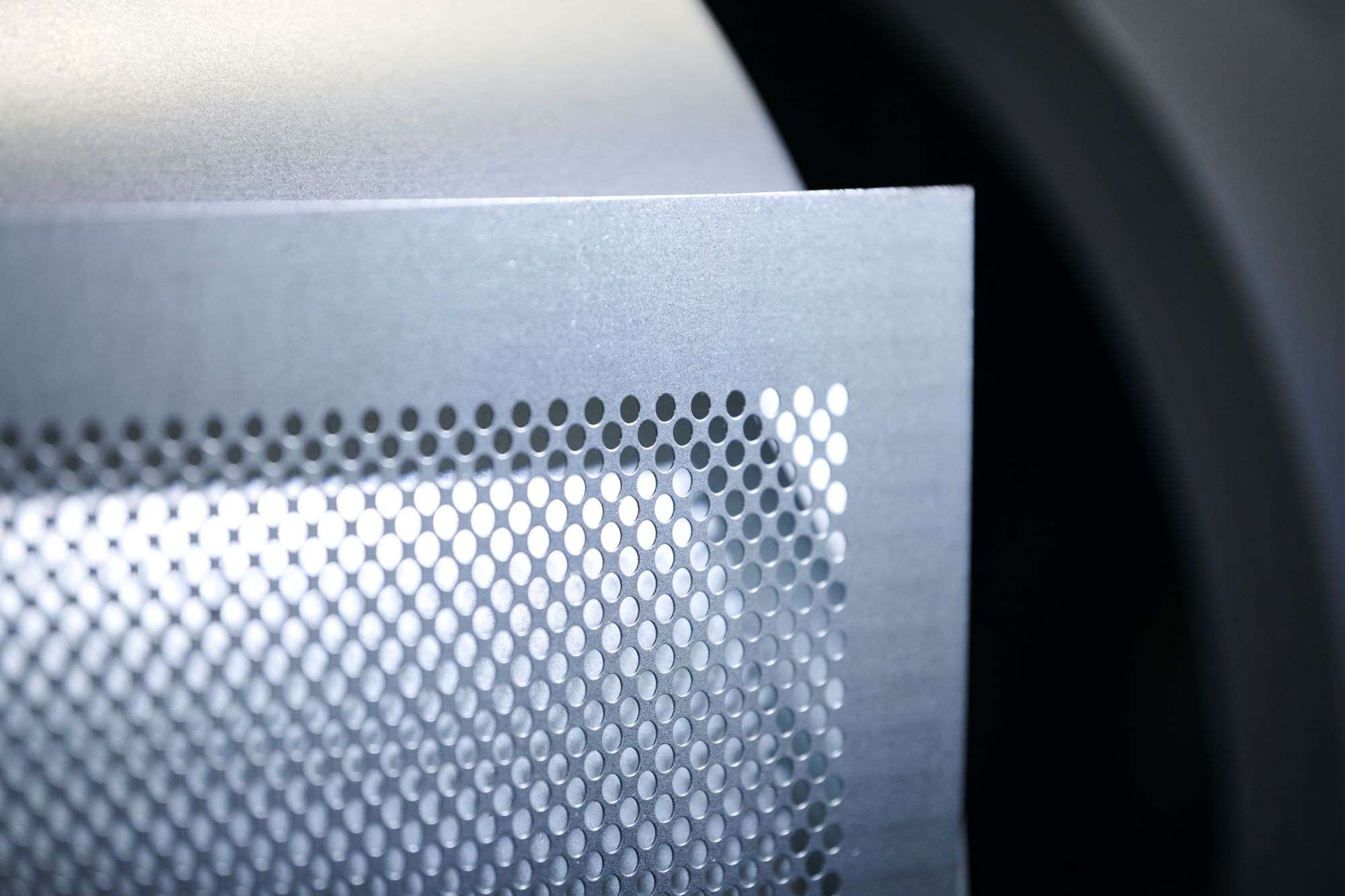
- Design freedom: The technology is hidden within the ceiling, which can be adapted to different designs, colors, and perforation patterns without compromising functionality.
Want to know more?
Would you like to learn more about the possibilities with the DAMPA® Climate Ceiling, or do you have a specific project where the solution could be relevant?
Contact us at dampa@dampa.dk or by phone at +45 6376 1300, and we will help you create an optimal indoor climate with low energy consumption and high comfort.
FAQ – Frequently Asked Questions about Climate Ceilings
- How does a climate ceiling work?
A climate ceiling regulates temperature through radiant heating and cooling. When cold or hot water circulates in the built-in pipes, energy is transferred to the room’s surfaces, creating a comfortable temperature without draughts or noise. - What is the difference between a climate ceiling and traditional ventilation cooling?
Traditional cooling blows cold air into the room, while a climate ceiling cools by having the room’s heat “radiate” up to the ceiling. This avoids draught and provides a more even and natural comfort. - Where can a climate ceiling be used?
Climate ceilings are ideal for offices, meeting rooms, hospitals, patient rooms, hotels, auditoriums, and other spaces where a healthy and energy-efficient indoor climate is important. They are also advantageous in buildings with high ceilings. - What are the benefits of the DAMPA® Climate Ceiling?
The DAMPA® Climate Ceiling provides high comfort, lower operating costs, and rapid temperature regulation. The patented D-pipe technology ensures efficient heat transfer and reduced resource consumption, and the solution can be integrated with acoustics and ventilation in one complete ceiling system.