

A good indoor climate is more important than ever. We spend most of our time indoors, and the quality of the spaces we occupy has a direct impact on how we feel, work, learn and perform.
Several studies indicate that a poor indoor climate can affect productivity, concentration and sickness absence. In one survey, one in five office workers in Denmark said they experienced problems with the indoor climate. The main challenges were excessive temperatures during the summer months, poor air quality, too much noise, low temperatures during the winter months and draughts.
These are exactly some of the challenges a climate ceiling can help address.
With DAMPA® Climate Ceiling, cooling and heating elements are combined with our perforated metal ceilings. This creates a functional and aesthetically pleasing ceiling solution that can contribute to a comfortable indoor climate with stable temperatures, good acoustics and the possibility of integrating features such as ventilation and lighting.
When temperature, acoustics and air distribution are considered together in the ceiling, the room can be designed more freely and experienced as calmer, without visible cooling and heating installations, disruptive draughts or unnecessary noise.
In this article, we have gathered eight reasons to choose a climate ceiling.
1. Stable temperatures all year round – without draughts and noise
With DAMPA® Climate Ceiling, you can create stable and comfortable temperatures all year round. The ceiling contributes to cooling on warm days and heating during the colder months.
The solution consists of integrated water-based cooling and heating elements, where cold or hot water circulates through built-in copper pipes. This turns the ceiling surface into an active climate component. Instead of cooling or heating the air directly from individual points, such as clarifiers, in the room, the climate ceiling regulates the users individual surface temperature.
This provides a calmer and more even temperature regulation that feels comfortable for users, without visible cooling and heating installations, disruptive draughts or unnecessary noise.
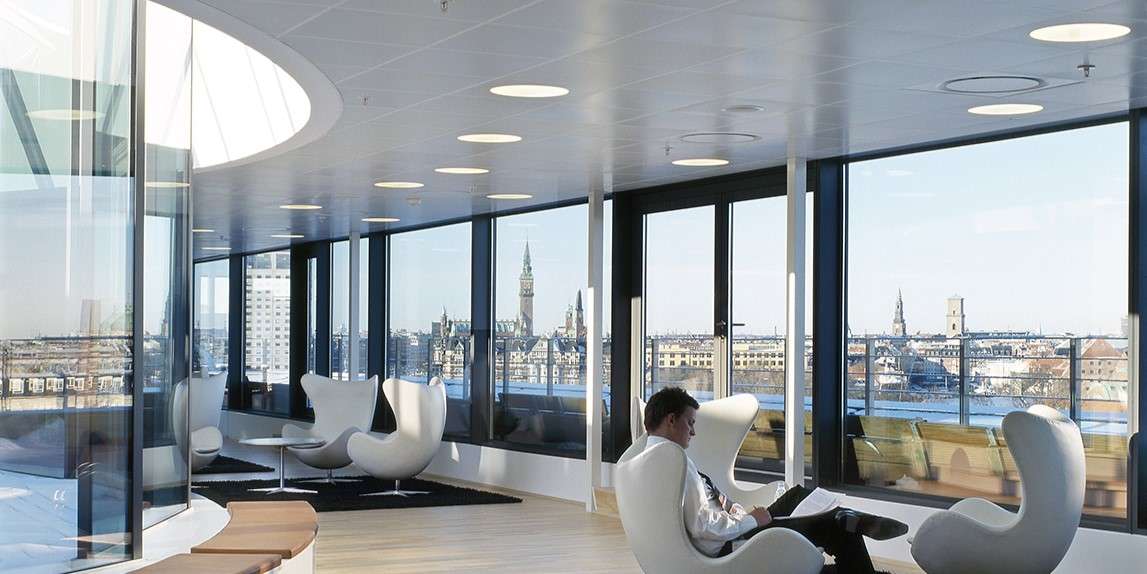
Climate ceiling is particularly relevant in rooms where the needs change during the day, such as offices, meeting rooms, classrooms, laboratories and public buildings. Solar gain, occupancy and technical equipment can quickly affect the temperature, and in these cases a climate ceiling can help keep the indoor climate stable.
Read more in the article “How does a climate ceiling work?”
2. High performance and fast response
DAMPA® Climate Ceiling is developed to deliver high performance and efficient temperature regulation. The solution combines metal ceilings with cooling and heating elements, where the heat-conducting properties of the materials contribute to the efficient transfer of cooling and heating.
Together with aluminium, steel is one of the most effective materials for integrating cooling and heating elements, as it supports both high performance and a fast response to temperature changes. By combining our metal ceilings with a heat-conducting aluminium plate around the copper pipe element, the system achieves efficient heat transfer when the room temperature changes.
Using our patented copper D-pipe, the climate ceiling achieves a large contact surface, enabling it to respond quickly to temperature changes in the room. The temperature change can be felt within minutes, making the solution suitable for buildings where usage patterns and temperature loads vary throughout the day.
3. Low construction height and low weight
DAMPA® Climate Ceiling is a lightweight solution that requires only a low construction height. Because the copper pipes are integrated directly into the ceiling system, limited additional space is needed above the ceiling for connections between the individual climate elements.
The low construction height can be particularly valuable in refurbishment projects, where the existing ceiling void is often limited, or in new-build projects where every installation can affect the overall building structure.
At the same time, DAMPA® Climate Ceiling weighs around one third of several alternative solutions on the market. This can make the solution easier to handle and integrate, especially in projects where weight, flexibility and installation conditions are important factors.
4. Combine temperature regulation with acoustic optimization
A good indoor climate is not only about temperature. Acoustics have a major impact on how a room is experienced and how well it functions in everyday use.
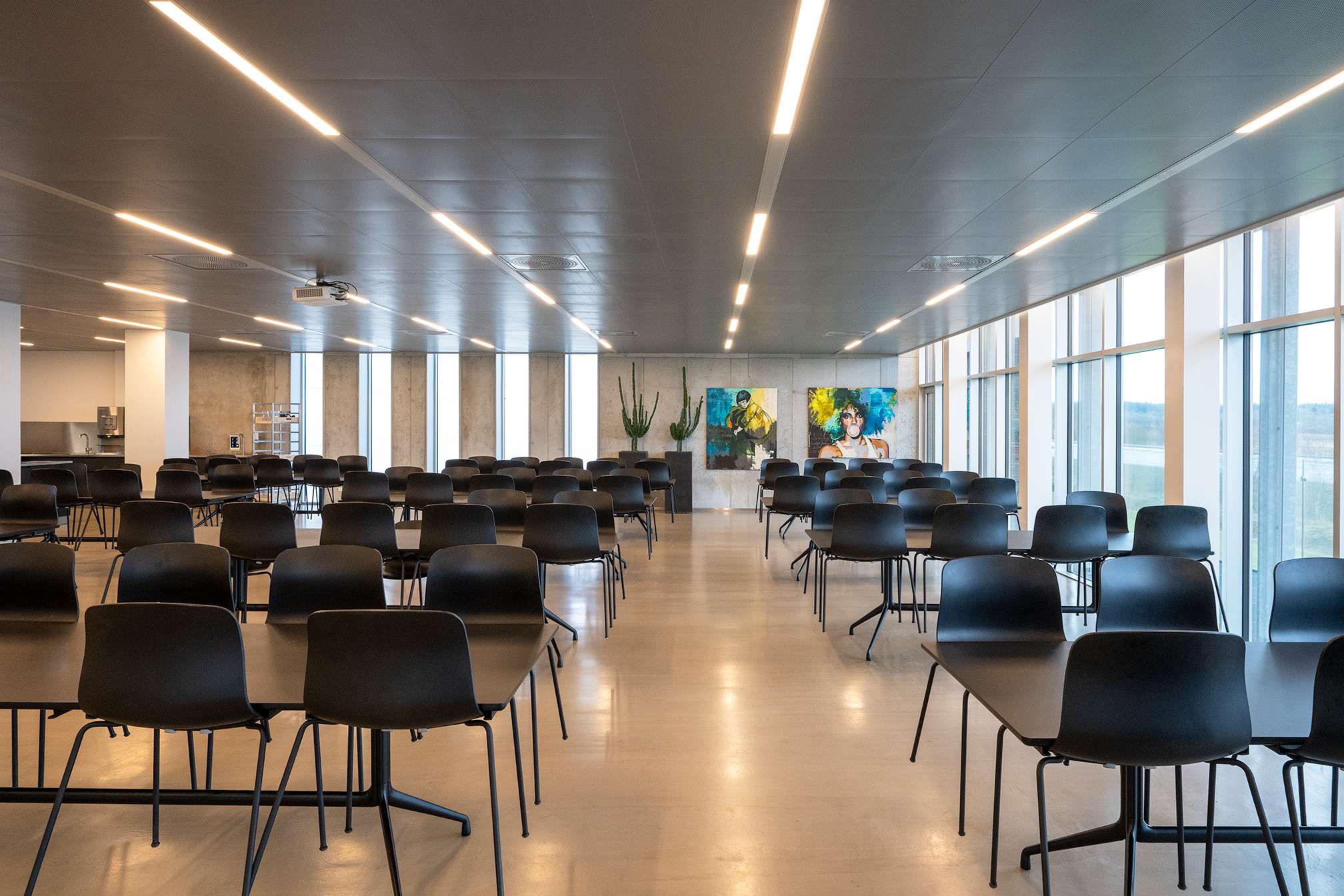
DAMPA® Climate Ceiling is integrated into our ceiling systems and can therefore be combined with our perforated acoustic ceilings in acoustic class A, B or C. This means the ceiling supports both temperature regulation and sound absorption, helping to reduce reverberation and noise levels.
By combining climate control and acoustics in the same ceiling solution, the room can be designed with fewer separate additions and a cleaner architectural expression, while creating more comfortable conditions for working, learning and spending time in the space.
Read more about acoustics.
5. Integrate with diffuse ventilation, lighting and more
A climate ceiling rarely stands alone. In modern construction, the ceiling often needs to accommodate ventilation, lighting, sprinklers, sensors, access to installations and other technical functions.
When choosing DAMPA’s acoustic metal ceilings, it is an obvious opportunity to use the perforations for the integration of diffuse ventilation. Here, air is distributed through perforations in the ceiling surface, making the ventilation an integrated part of the ceiling design. This can contribute to even air distribution, a low noise level and a calm visual expression.
At the same time, lighting, sprinklers, sensors and other integrations can be incorporated into the same ceiling layout. When installations are coordinated from the outset, the risk of late-stage compromises between technical requirements and architecture is reduced.
Read more about the integration possibilities.
6. Architectural freedom and design possibilities
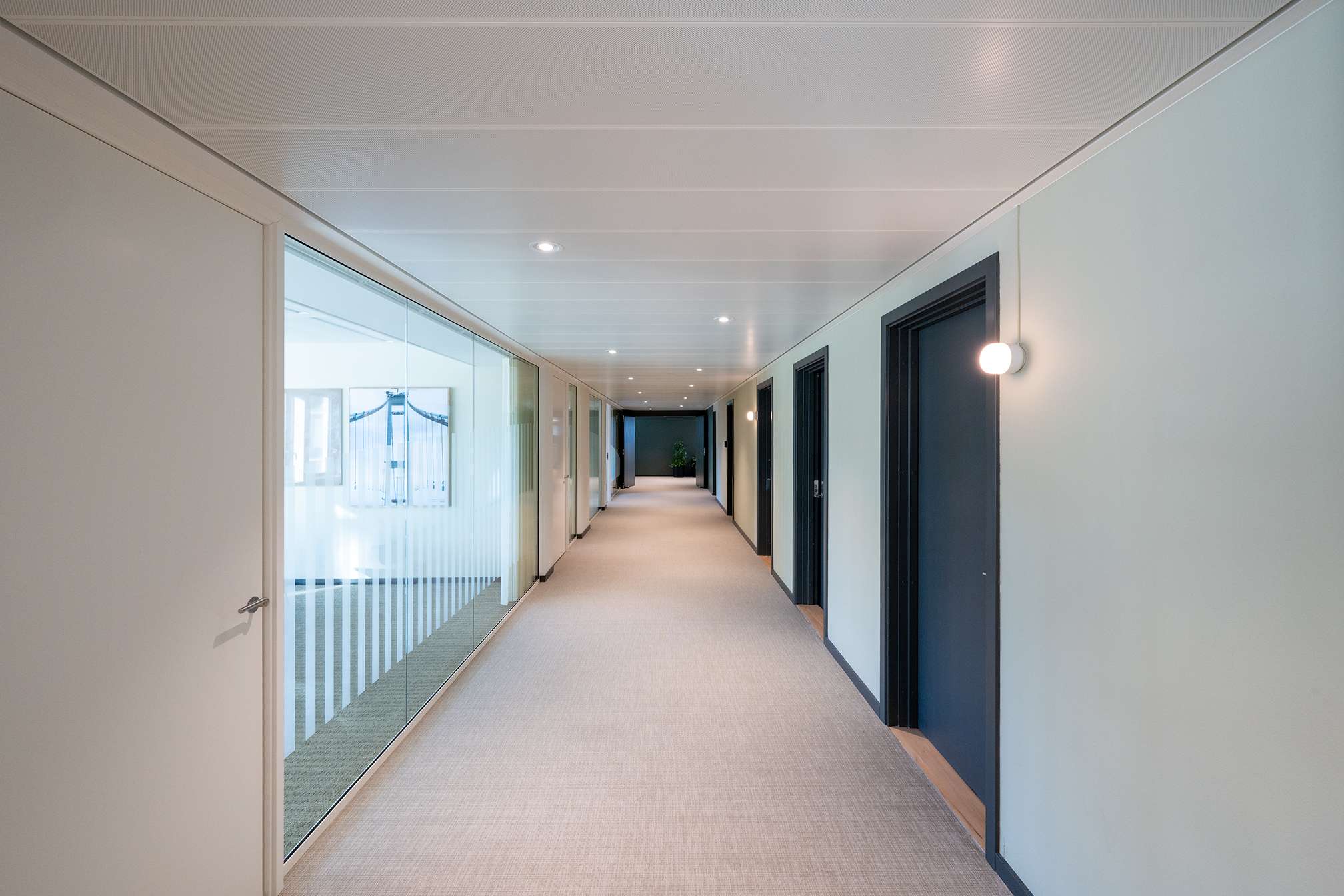
When cooling and heating are integrated into the ceiling, the need for radiators, convectors and other visible installations on walls and floors or in the ceiling surface can be reduced. This provides greater freedom in the interior layout and a calmer architectural expression.
This means that the ceiling can become an active part of the room design rather than simply a surface where technical installations need to be placed. The cooling and heating elements are concealed behind the ceiling surface, allowing the room to retain a clean and cohesive expression.
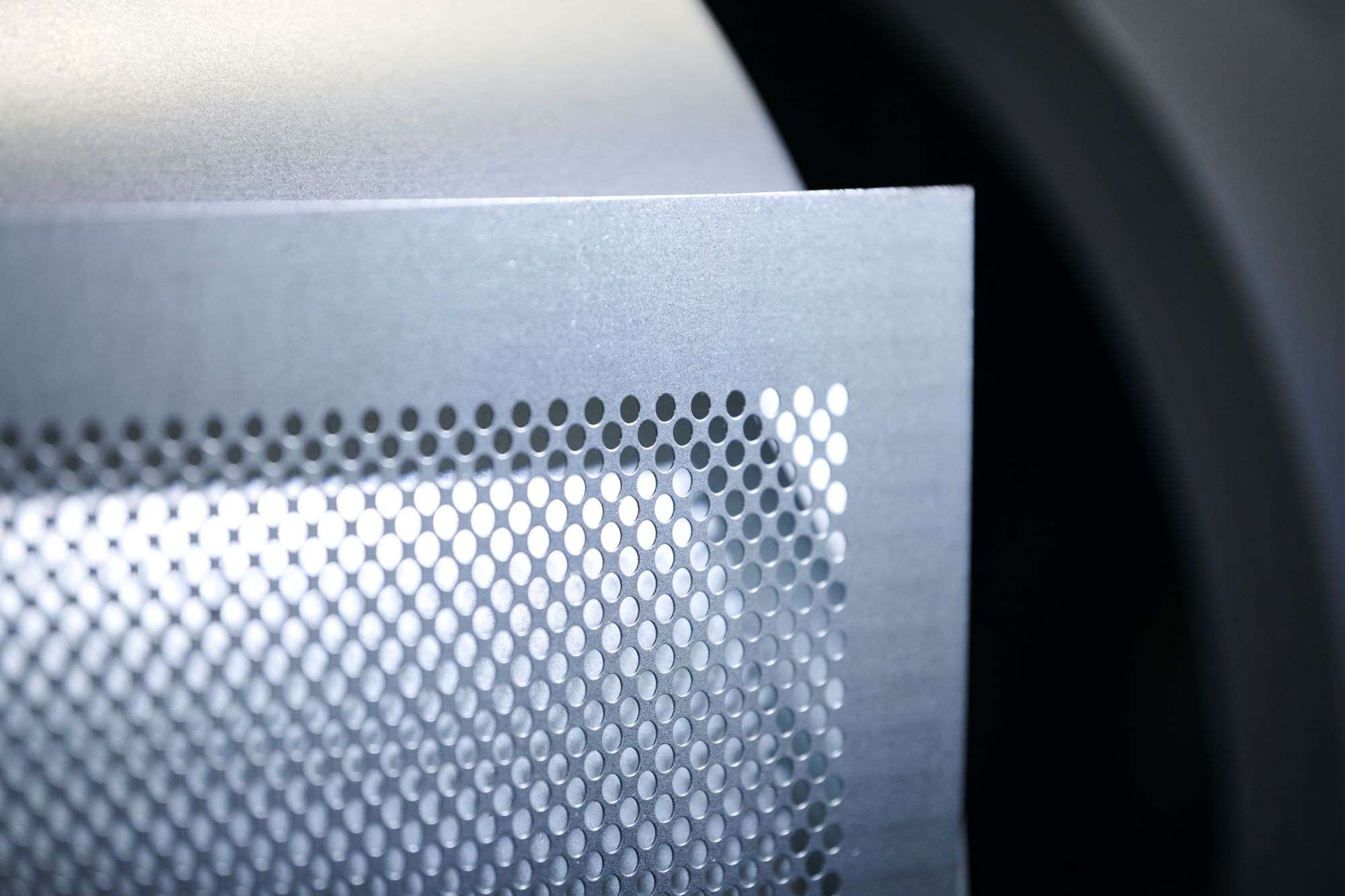
The flexibility of metal also provides a wide range of design possibilities. The ceiling can be adapted to the architectural intention of the project through different dimensions, colours, perforation patterns and finishes – with the option of integrating functions such as acoustics, ventilation and lighting in one complete ceiling solution.
Read more about the design possibilities.
7. Built for long-term operation and low maintenance
DAMPA® Climate Ceiling can be a larger initial investment than a traditional ceiling. However, when the solution is assessed from a perspective including the full service life, the picture often looks different.
In operation, DAMPA® Climate Ceiling can be an energy-efficient solution compared with traditional cooling and heating systems. At the same time, the climate ceiling brings several functions together in one solution: cooling, heating, acoustic performance and the option to integrate ventilation, lighting and more. This can reduce the need for separate visible installations and contribute to a more comfortable indoor climate.
A good indoor climate can have an impact on users’ well-being, concentration and overall comfort. The value of a climate ceiling should therefore not be assessed on the initial investment alone, but also on operation, maintenance, flexibility and how the building performs over time.
DAMPA’s metal ceilings are robust, have a long service life and require little maintenance. The modular ceiling systems also provide easy access to installations above the ceiling, making servicing, inspection and future adaptations simpler. Overall, this can contribute to lower operation and maintenance costs and a stronger whole-life value for the building.
8. A documented solution
DAMPA® Climate Ceiling is developed with a focus on efficiency and reduced resource use. The integrated cooling/heating system is optimised with a 37% saving in copper in the D-pipe itself and a 69% saving in aluminium in the heat-conducting plate, resulting in an overall 55% reduction in production energy.
The solution is documented with an EPD, which provides verified data on the environmental impact of the product. This means that DAMPA® Climate Ceiling can be used in projects working with environmental certification schemes such as DGNB, BREEAM and LEED.
DAMPA® Climate Ceiling is based on our metal ceilings, where the ceiling elements are produced locally in Tommerup, Denmark, and the climate elements are integrated directly into the ceiling system. Our standard materials contain a significant proportion of recycled content, and depending on the project’s requirements and ambitions, we also offer solutions with up to 75% recycled content.
Read more about DAMPA’s work with sustainability and documentation.
Consider the climate ceiling early in the design process
A climate ceiling provides the greatest value when it is considered early in the design process. This allows cooling, heating, acoustics, ventilation, lighting, module sizes and access to installations to be coordinated from the outset.
It creates a better basis for a solution that works technically, supports the architecture and makes the building easier to operate.
Are you considering a climate ceiling for an upcoming project? Contact us for a discussion about the many possibilities.